Search
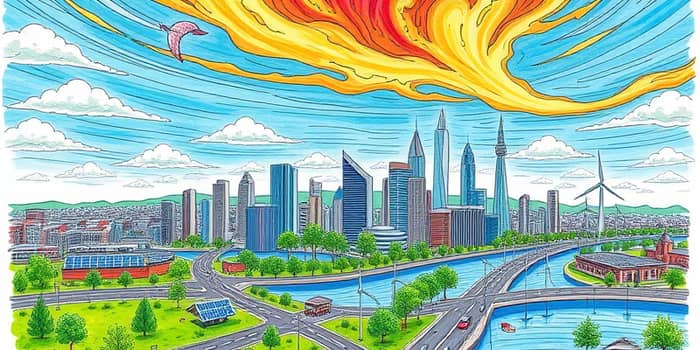
As the planet warms and weather patterns shift, our cities, roads, power networks, and water systems face unprecedented threats. The choices we make today about how to build will determine whether future generations inherit stability or vulnerability.
With around 60% of the infrastructure needed by 2050 yet to be built, we stand at a crossroads. We can either repeat the mistakes of the past or seize a once in a generation opportunity to embed resilience and sustainability into every project.
Traditional infrastructure—energy, transport, water, and communications—accounts for roughly 70% of global carbon emissions and is highly exposed to floods, storms, heat waves, and rising seas. In developing countries, where resilience is lowest, damage can trigger widespread service disruptions, economic setbacks, and humanitarian crises.
Failure to adapt carries steep costs: collapsing roads, washed-out rail lines, blackouts, and water shortages. Yet for a marginal additional investment—often up to 3% to upfront costs—we can achieve benefit-cost ratios of around 4:1, avoiding trillions in losses and strengthening communities.
To protect assets and people, infrastructure must be both resilient and low-carbon. These two dimensions frequently overlap, creating projects that withstand shocks while reducing emissions.
By embedding resilience into new infrastructure and aligning with climate-resilient, net-zero development pathways, we avoid locking in long-term vulnerabilities and carbon-intensive designs.
Bridging the global funding gap requires around USD 6.9 trillion annually through 2030 in sustainable infrastructure—double the world’s capital stock growth. Yet private allocations to sustainable projects remain near 1% of institutional portfolios.
Investing an extra trillion dollars in resilience in developing countries could generate over USD 4.2 trillion in net benefits, including:
Moreover, infrastructure projects are powerful job engines. In major emerging economies, each USD 1 million invested creates:
Such investments catalyze productivity, connectivity, and local growth, driving down poverty and boosting quality of life improvements across communities.
Public budgets alone cannot finance the low-carbon, resilient infrastructure we need. Mobilizing private capital is essential for scaling up investments and driving innovation.
Public–private partnerships (PPPs) offer a proven model to bring together financing, technology, and operational expertise. To ensure climate objectives are met, specialized toolkits guide governments and investors in integrating risk assessment and green design.
These coordinated approaches reduce uncertainty, align incentives, and unlock private flows at scale, paving the way for resilient, low-carbon cities and networks.
Investors increasingly recognize climate infrastructure as a standalone category offering long-term, stable cash flows and lower volatility. Renewable energy, resilient transport corridors, and water systems all qualify as essential services with predictable revenue streams.
Regulatory frameworks—from the EU taxonomy to mandatory climate disclosure—are accelerating this shift. As policies tighten and physical risks mount, climate-smart assets will become ever more attractive, ensuring capital can be deployed sustainably and profitably.
We face a decisive moment. The infrastructure we build in the next decade will determine whether communities thrive or falter under intensifying climate impacts. By embedding resilience and low-carbon design up-front, we protect lives, unlock economic opportunity, and safeguard our shared future.
Every stakeholder—governments, investors, engineers, and citizens—has a role to play. Through bold policy, innovative financing, and collaborative partnerships, we can transform risk into resilience and crisis into catalyst.
The time to act is now. Together, we can build infrastructure that endures, empowers, and elevates us all.
References