Search
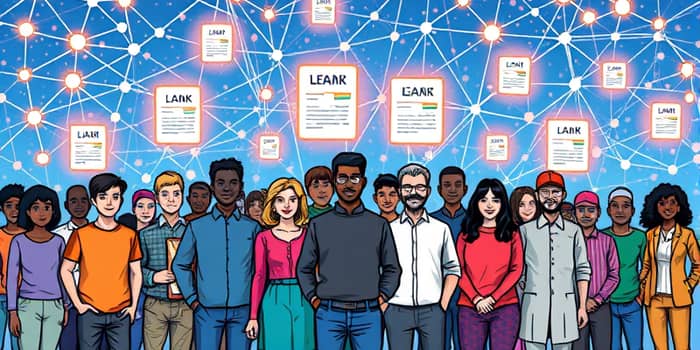
In today’s financial landscape, automated lending systems built on artificial intelligence are reshaping how credit decisions are made. These systems promise faster, more efficient credit decisions and the potential to extend loans to underserved communities. Yet, beneath the surface lies a risk: when AI models learn from historical patterns, they can perpetuate—and even amplify—longstanding biases.
AI-driven underwriting offers an unprecedented opportunity to expand access to credit. By leveraging alternative data such as payment histories, spending behavior and smartphone usage, lenders can move beyond traditional credit scores. However, when training data reflect discriminatory practices—like redlining or gender-based lending—AI can inherit those biases.
Opaque “black box” decisions make it difficult for stakeholders to audit and correct unfair outcomes. This lack of transparency undermines trust among borrowers and regulators alike, creating hidden barriers to equitable lending that disproportionately affect women, minorities and low-income applicants.
Empirical research has uncovered stark disparities in AI-driven credit decisions. In one study, female applicants received credit scores 6–8 points lower than male counterparts with similar financial profiles, despite having equal or lower default rates [2]. Another analysis found that Black and Hispanic borrowers pay 5–9 basis points more in interest than white applicants with equivalent risk metrics [3].
Neutral variables such as ZIP codes or digital footprints—like email provider or late-night shopping behavior—can act as proxies for protected characteristics, leading to unintended discrimination. A notable case involved a young African American woman denied an auto loan solely based on “digital signals” that correlated with her demographic group [11].
Bias can enter automated lending at multiple stages. First, historical data reflecting biases carry forward patterns of exclusion and redlining. When models detect statistical correlations—such as higher default rates among certain groups—they penalize future applicants from those communities.
Second, algorithmic opacity prevents clear understanding of how inputs drive outcomes. Complex neural networks often lack interpretability, making it impossible for auditors to pinpoint unfair variables. Third, proxy discrimination occurs when seemingly neutral factors—like smartphone type or web browsing times—stand in for protected attributes.
Finally, feedback loops reinforce bias: if certain demographics are repeatedly denied credit, their financial profiles never improve, creating new data that justify continued exclusion.
Addressing ethical concerns requires a holistic approach combining technology, governance and stakeholder engagement. Lenders must embed fairness at every stage of model development and deployment.
Automated lending operates under a complex legal regime designed to prevent discriminatory practices. In the United States, the Equal Credit Opportunity Act and the Fair Housing Act prohibit disparate impact, meaning lenders must demonstrate that AI systems do not harm protected groups. The Consumer Financial Protection Bureau has signaled intensified scrutiny of opaque models that produce unexplained adverse outcomes.
International standards, such as the NIST AI Risk Management Framework, provide guidelines for bias detection and mitigation. However, regulators face challenges proving violations when models lack transparency. Firms must therefore adopt transparent and accountable AI practices to satisfy both legal requirements and public expectations.
Looking ahead, the ethical deployment of AI in lending holds the promise of a “win-win” scenario: more accurate risk assessment paired with greater fairness. Achieving this vision demands ongoing commitments to monitoring, transparency and stakeholder involvement.
As financial institutions refine their AI strategies, they must balance the pursuit of efficiency with a steadfast focus on equity. Only by confronting and correcting bias can automated lending fulfill its promise of expanding fair credit access for all.
Ethical AI in lending is not a one-time project but a continuous journey. Lenders must pair advanced analytics with robust governance, rigorous testing and human judgment. Policymakers, in turn, should enforce transparency standards that prevent hidden discrimination and uphold borrowers’ rights.
By embracing human-centric, transparent AI and committing to ongoing oversight, the industry can mitigate bias, foster equity and unlock the full potential of automated lending for underserved communities worldwide.
References