Search
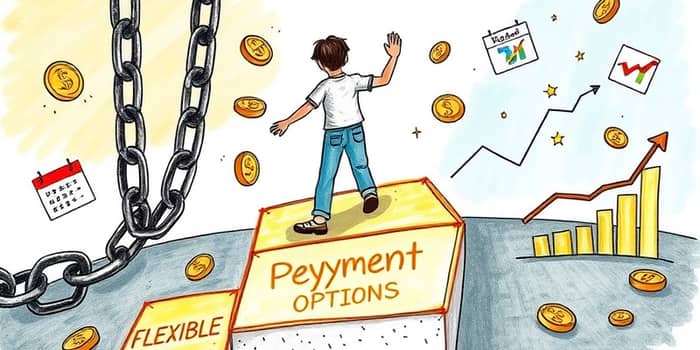
For decades, borrowers have relied on the familiar rhythm of fixed monthly payments to chip away at student loans, credit cards, and buy now, pay later arrangements. Yet this rigidity often clashes with unpredictable income, unexpected expenses, and evolving financial goals. Today, innovation is reshaping how consumers and graduates manage debt, offering dynamic options that adapt to real life rather than demanding strict conformity.
In this article, we explore the evolution of repayment structures, highlight cutting-edge alternatives like income-driven plans and BNPL models, and share practical tactics to help you regain control of your financial future. Whether you’re a recent graduate or a seasoned shopper, you’ll find inspiration and actionable advice to transform your repayment journey.
Traditional repayment plans, such as standard repayment for federal student loans, lock borrowers into fixed installments over a set period—typically 10 years. Graduated and extended plans ease the early burden but stretch payments across 25 years, increasing total interest costs. While predictability offers comfort, it often fails to account for sudden job loss, pay cuts, or shifting life priorities.
Many borrowers find themselves trapped in rigid monthly obligations that ignore cash flow. This mismatch can lead to defaults, fee penalties, and emotional stress. Even well-intentioned plans carry hidden limitations, highlighting the need for creative alternatives that mirror real-world fluctuations.
Income-Driven Repayment (IDR) plans tie your monthly obligation to your earnings, typically 1–20% of discretionary income. Under these models, borrowers with low or no income can pay as little as $0 per month. After 20–30 years of qualifying payments, the remaining balance is forgiven.
Key changes are taking effect post-July 1, 2026. Legacy IDR options such as PAYE and ICR will phase out by 2028, replaced by a streamlined Revised Alternative Plan (RAP) that caps payments at 1–10% of adjusted gross income and guarantees a minimum reduction of $50 per month.
The evolution of IDR demonstrates how flexible, income-tied payment structures can relieve pressure during lean periods while still ensuring long-term progress toward debt elimination.
Initially a tool for online shoppers, Buy Now, Pay Later (BNPL) services break purchases into small installments—often interest-free—over weeks or months. Giants like Affirm, Afterpay, Klarna, and PayPal Pay Later have extended these features to healthcare, home improvement, and retail, offering an alternative to revolving credit cards.
Yet these innovations carry risks: missed BNPL installments often trigger late fees, and extensive use can strain cash flow if not monitored closely. Understanding the terms and limits—often from $30 to $17,500—helps you harness BNPL as a tool rather than a trap.
Beyond established plans, borrowers can deploy imaginative tactics to accelerate payoff and reduce stress. Combining approaches often yields the best results, enabling you to tailor repayment to your unique circumstances.
Innovations only help if you use them strategically. Follow these steps to make informed choices and maintain momentum toward full repayment:
The repayment landscape continues to evolve with emerging technologies. Artificial intelligence could soon offer personalized, real-time payment adjustments based on spending patterns, while blockchain-enabled wallets might automate micro-payments directly from income streams.
As lenders and servicers innovate, borrowers stand to benefit from smarter, more compassionate financial systems that acknowledge the ebb and flow of modern life. By embracing flexible options and creative tactics, you can transform debt from a source of anxiety into a manageable challenge.
Your repayment journey is uniquely yours. Start by selecting the structures that align with your cash flow, automate key actions, and stay informed about upcoming policy changes. With the right blend of innovation and initiative, you can unlock long-term financial well-being with confidence and dignity.
References