Search
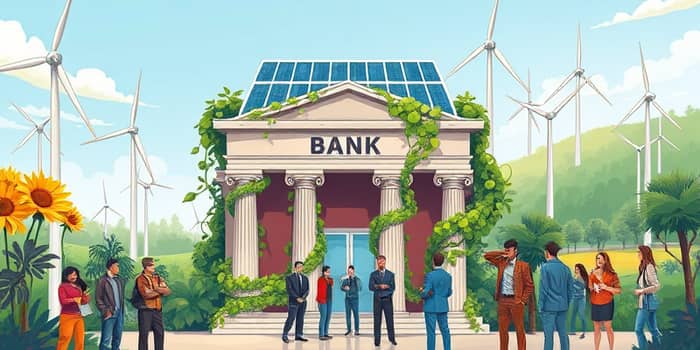
In recent years, the lending landscape has undergone a profound transformation as financial institutions seek to embed environmental, social, and governance considerations into every credit decision. Alongside unprecedented public and investor demand for accountability, banks are overhauling policies to reflect ESG criteria.
This article explores the drivers, products, risk integration, benefits, regulations, and real-world applications of ESG-driven lending, offering practical insights for practitioners.
The shift towards sustainable lending is propelled by regulatory pressures and stakeholder expectations. Governments and supranational bodies have introduced frameworks such as the EU Taxonomy and SFDR that require banks to classify and disclose the environmental impact of their portfolios.
Climate-related risks such as floods and droughts, together with governance issues like board diversity and labor standards, have become key determinants of creditworthiness. This new risk paradigm for credit decisions emphasizes long-term resilience over short-term financial metrics.
Stakeholder demands now drive banks to demonstrate responsible finance, leading to enhanced client engagement strategies where institutions advise borrowers on emissions reduction pathways and social impact improvements. The shift from pure financial metrics to a holistic view of creditworthiness is unlocking new advisory service opportunities.
Banks have innovated a suite of products to align financing with sustainability goals. Green loans restrict proceeds to ecologically beneficial projects while sustainability-linked loans tie pricing to performance on predefined ESG targets.
While green loans focus on specific use of proceeds, sustainability-linked instruments provide greater flexibility, allowing general corporate financing with performance criteria embedded into loan agreements.
It is notable that up to 96 percent of sustainability-linked loan facilities are structured as revolving credit lines, contrasting with the term-loan orientation of green loans. Beyond these core products, banks are exploring impact credit lines, green bonds, and sustainable supply chain financing, creating a diverse toolkit for clients at varying stages of their sustainability journeys.
Embedding sustainability considerations into risk frameworks requires examining broader risk criteria across multiple dimensions beyond traditional financial ratios. Lenders now assess:
To operationalize these factors, banks employ ESG scorecards, third-party ratings, and adjust internal credit rating models to price in long-term climate and social risks.
Sector-specific policies refine this approach. Institutions may exclude exposure to unconventional fossil fuels and deforestation-linked industries, while setting tailored thresholds for sectors such as agriculture, mining, and transportation to ensure alignment with decarbonization trajectories.
Integrating ESG brings unlocking sustainable finance opportunities and innovation across multiple dimensions:
Borrowers demonstrating strong ESG performance can access more favorable financing terms, build operational resilience, and improve their reputation among investors and stakeholders.
Advances in technology enable automated sustainability scoring, blockchain-enabled carbon credit financing, and tokenized green bonds, further expanding the frontiers of sustainable finance.
Compliance with evolving regulations has become a cornerstone of leading practices. The clear criteria for classifying economic activities provided by the EU Taxonomy underpins the Green Asset Ratio, measuring a bank’s exposure to green assets.
Under the Sustainable Finance Disclosure Regulation (SFDR), financial products are classified as Article 6, 8, or 9 based on their ESG integration and objectives, driving greater transparency in investor disclosures.
The Corporate Sustainability Reporting Directive (CSRD) requires banks to report on their own ESG performance and systematically collect client data to meet standardized ESRS disclosures. Alignment with the Task Force on Climate-related Financial Disclosures (TCFD) ensures scenario analysis and stress testing become core components of credit risk frameworks.
Real-world examples highlight both progress and hurdles. Groupe Bel’s €315 million sustainability-linked loan, indexed to greenhouse gas reduction and nutrition quality targets, demonstrates how quantifiable objectives can be embedded into financing agreements.
Data quality and availability on ESG metrics can be uneven, especially among small and medium enterprises, complicating accurate risk assessment. Divergent regional regulations further challenge global banks, necessitating robust governance frameworks for consistent internal policies.
The integration of ESG factors into lending practices represents a transformative shift in credit markets, blending financial rigor with sustainability imperatives. As regulatory demands intensify and stakeholder scrutiny deepens, banks that proactively embed ESG criteria will be better positioned to manage risk and unlock new growth opportunities.
Looking ahead, the use of artificial intelligence and machine learning in ESG assessments promises real-time monitoring of climate and social risks, enabling dynamic adjustments to loan terms based on evolving performance.
Ultimately, sustainable lending is not just a compliance exercise but a strategic imperative that reshapes the financial ecosystem for the betterment of society and the planet.
References