Search
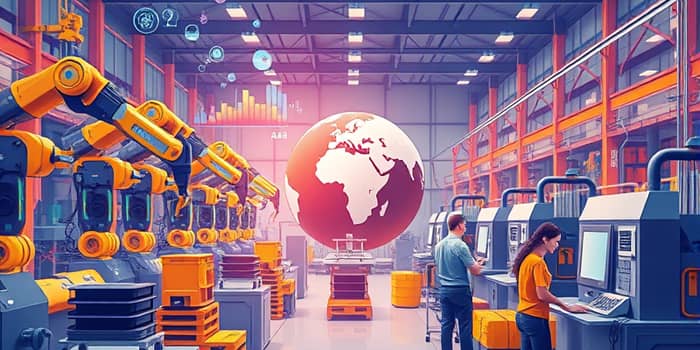
Manufacturing output serves as the heartbeat of any economy, reflecting its ability to innovate, adapt, and sustain growth. By tracking production volumes and efficiency metrics, leaders can steer their organizations toward greater resilience and competitive advantage.
In this article, we delve into the latest data on U.S. and global manufacturing, outline essential performance indicators, and offer strategic guidance for businesses seeking to thrive in an ever-evolving industrial landscape.
Total volume of goods produced during a defined period forms the core of manufacturing output metrics. As factories convert raw materials into finished products, these metrics provide a clear benchmark for operational performance.
Output comprises roughly 78% of total industrial production, making it an indispensable gauge of economic health. When leaders embrace data-driven decision making, they unlock insights that fuel continuous improvement and long-term growth.
Early 2026 data reveal cautiously optimistic performance across American factories. After a slowdown in late 2025, output rebounded, driven by targeted investments and process refinements.
Category-specific shifts illustrate the complex nature of recovery. Consumer durables and automotive products faced headwinds, while defense equipment and construction supplies exhibited robust gains.
Manufacturing output worldwide is projected to reach US$29.73 trillion in 2026, with a compound annual growth rate of 1.76% through 2031. This trajectory underscores the sector’s resilience amid shifting geopolitics and technological disruption.
These drivers create fertile ground for manufacturers to innovate and expand beyond traditional markets. By aligning strategies with emerging trends, businesses can capitalize on fresh opportunities.
Effective measurement enables leaders to pinpoint strengths, address weaknesses, and reinforce best practices. Below is a summary of critical manufacturing KPIs.
Additional metrics—such as cycle time, downtime, and defect rates—offer deeper insights when combined with financial indicators like cost per unit and multi-factor productivity.
In a landscape marked by supply chain volatility and evolving consumer preferences, manufacturers must adopt multifaceted strategies.
These approaches help companies not only survive disruptions but also emerge stronger, embodying industry resilience through proactive innovation.
Manufacturers who synchronize business objectives with technology roadmaps will lead the next wave of industrial transformation. By prioritizing sustainability, digital dexterity, and employee empowerment, organizations lay the groundwork for enduring success.
Executive teams should champion transparent performance reviews and align incentives with long-term value creation. Cross-functional collaboration—bridging operations, IT, and R&D—accelerates innovation and enhances responsiveness to market shifts.
Ultimately, manufacturing output is not merely a statistic; it represents the collective effort of visionaries, engineers, and workers striving for excellence. By embracing holistic metrics and strategic foresight, businesses can craft a narrative of growth that inspires stakeholders and elevates global industrial health.
In today’s dynamic environment, the path to prosperity lies in harnessing robust data, fostering adaptability, and nurturing a culture of continuous advancement. Let these insights guide your journey toward a stronger, more resilient manufacturing future.
References