Search
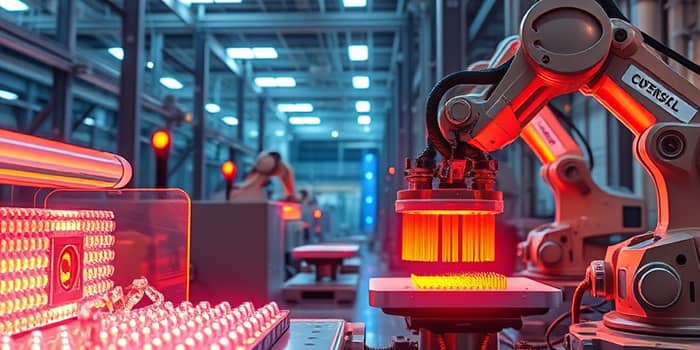
The dawn of a new era in manufacturing is being shaped by breakthroughs in materials science. Engineers, chemists, physicists and computer scientists are collaborating to push the boundaries of what is possible on the factory floor. This article explores how newly designed metals, polymers, nanostructures and smart materials are unlocking performance gains, sustainability and unprecedented design freedom in industries ranging from aerospace to healthcare.
By understanding the atomic architecture of matter and applying advanced processing techniques, innovators are creating solutions for some of the most pressing challenges facing manufacturers today. From reduced emissions and lighter vehicles to custom medical implants and flexible electronics, the impact of these developments is already visible and promises to grow exponentially.
At its heart, materials science is an interdisciplinary field at the intersection of chemistry, physics, engineering and computer science. It investigates how atomic arrangements and microstructures translate into macroscopic performance, while leveraging artificial intelligence and machine learning to accelerate discovery and optimization.
Key research pillars underscore this work: structure–property relationships reveal how packing patterns of atoms dictate strength, conductivity and optical behavior. Simultaneously, processing–structure relationships define how synthesis methods shape microstructures and influence final performance. A third focus on lifecycle assessment evaluates durability, repairability and end-of-life recyclability to ensure that new materials support a circular economy.
Several economic, workforce and policy signals confirm that materials science is central to the future of manufacturing. Demand for experts in this field is growing rapidly as governments and companies align strategies around sustainability, advanced electronics and efficient transportation.
Key drivers include:
Initiatives like the NSF’s Advanced Manufacturing focus area have funded foundational research in CAD, nanotechnology, additive manufacturing and digital twins. Their goal is to strengthen productivity, flexibility and global competitiveness while creating high-wage jobs.
Game-changing advances are emerging across multiple material families. By tailoring composition and structure, scientists are unlocking new performance regimes and enabling manufacturing processes that were unimaginable just a decade ago.
Lightweight, high-strength metal alloys—such as aluminum-lithium blends, magnesium alloys and next-generation steels—are essential for reducing fuel consumption and lowering emissions in both aerospace and automotive applications. An exciting frontier is high-entropy alloys, which incorporate multiple principal elements to achieve superior toughness and thermal stability. Parallel efforts optimize alloys specifically for additive manufacturing, ensuring rapid solidification and desirable grain structures in printed components.
High-performance thermoplastics like PEEK and PEKK, along with carbon- and glass-fiber composites, are replacing metals in demanding environments. These materials offer impressive strength-to-weight ratios and excellent chemical resistance. A growing emphasis on sustainability has led to the development of recyclable and bio-based polymers that can be easily depolymerized and remade into new parts. Such innovations are especially valuable in consumer goods and construction, where circular processes are gaining traction.
Materials engineered at the nanoscale—features smaller than 100 nanometers—exhibit radically different optical, electrical and mechanical properties due to quantum and surface effects. Nanostructured battery electrodes enable faster charging and higher capacities, while quantum dots enhance display brightness and sensor sensitivity. Lipid nanoparticles, famously used in mRNA vaccines, demonstrate how nano-engineering can revolutionize healthcare delivery. Emerging nanocomposites and coatings add wear resistance, hydrophobicity and anti-corrosion performance to industrial surfaces.
Graphene, carbon nanotubes and transition metal dichalcogenides exemplify the promise of 2D materials. With remarkable carrier mobility and mechanical strength, they offer a path toward ultrathin, flexible electronics and more efficient transistors. Research into neuromorphic devices and photonic circuits continues to expand the horizons of computing and communications, integrating these semiconducting sheets into next-generation chips and sensors.
Metamaterials are artificially structured composites that exhibit properties not found in nature, such as negative refractive index or acoustic cloaking. Applications range from advanced antennas and vibration damping systems to novel optical lenses. Other avant-garde materials include shape memory alloys that revert to preset shapes, aerogels that provide unparalleled insulation at ultralow densities, and self-healing polymers and concretes that autonomously repair micro-cracks.
Once limited to rapid prototyping, additive manufacturing now supports end-use production in aerospace, medical devices and consumer electronics. Early NSF-backed research laid the groundwork for metal powder bed fusion and polymer extrusion techniques that are now standard in factories worldwide.
Advantages of integrating additive processes include:
As global markets demand greener products and resilient supply chains, new materials science stands at the forefront of sustainable innovation. Engineers are designing materials with end-of-life recycling in mind and implementing circular manufacturing loops. Digital twins paired with AI-driven modeling optimize resource usage and dramatically reduce waste. The convergence of AI, advanced metrology and closed-loop manufacturing creates an ecosystem where materials are continuously improved and repurposed rather than discarded.
Across industries, these advances empower manufacturers to deliver lighter, stronger and more adaptable products while lowering environmental impact. By investing in materials research, companies can secure a competitive advantage, foster high-skill jobs and lead the transition toward a sustainable, technologically advanced future. Today’s breakthroughs are just the beginning; as we deepen our understanding of matter and refine our processing tools, the potential applications will continue to multiply, shaping a manufacturing landscape defined by agility, efficiency and environmental stewardship.
References