Search
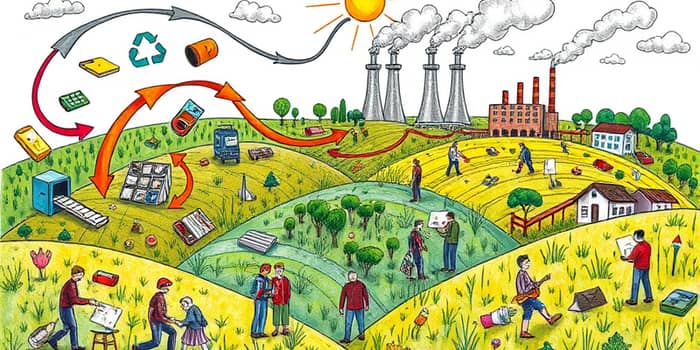
In a world where material consumption surges ahead of recycling efforts, businesses face both a profound challenge and an unprecedented opportunity. Today, only 6.9% of the 106 billion tonnes of materials used annually come from recycled sources—a decline from 7.2% in 2024. Meanwhile, linear practices cost the global economy an estimated €25.4 trillion each year. It’s time to rethink value, design out waste, and build resilient enterprises.
By embracing the principles of the circular economy, companies can align profitability with environmental stewardship. The five primary models offer pathways to decouple growth from resource depletion and pollution.
Our traditional linear system—take, make, dispose—exacts a steep toll. Material extraction and processing accounts for over 55% of greenhouse gas emissions and up to 90% of water stress and biodiversity loss. Moreover, if all recyclable materials were recovered without reducing consumption, global circularity could rise from 6.9% to 25%, yet consumption continues to outpace improvements.
Adopting circular strategies isn’t just environmental; it’s economic. Companies investing in reuse, repair, and remanufacturing secure lower production input costs and protect against material price shocks and scarcity. They foster customer loyalty through services that deliver ongoing value.
Five models form the backbone of circular business design, each addressing a distinct segment of the lifecycle.
Successful transition requires embedding circularity into strategy, design, and operations. Companies must:
These principles align businesses with planetary boundaries while unlocking resilience. They foster innovation and create deeper customer relationships.
Despite clear benefits, barriers remain. Current recycling systems handle only a fraction of material waste, and some inputs resist cost-effective recovery. System-level transformation is essential—recycling alone cannot solve the triple planetary crisis.
Policymakers and industry leaders must set global targets to reduce consumption, promote circular design, and optimize the lifespan of products and infrastructure. Effective governance can democratize circularity data and accelerate adoption.
Renault Group has pioneered a European factory dedicated to reconditioning used vehicles, repairing batteries, and reintegrating recycled materials. This initiative has reduced waste and created new value streams.
B2B e-commerce leader Manutan launched a circular hub to collect, refurbish, and resell office furniture. By doing so, the company has extended product lifecycles and engaged customers in sustainable procurement.
Le Parfait, a heritage glass container brand, removed layers of single-use packaging in food value chains. Their simple, reusable jars exemplify how design can eliminate unnecessary waste.
The circular economy is not a distant ideal—it’s a practical blueprint for a sustainable future. Businesses, policymakers, and consumers all play vital roles. Companies can incorporate circular inputs, service-based models, and robust end-of-life recovery.
Consumers can support reuse, repair, and sharing platforms. Policymakers must establish incentives for sustainable practices and invest in infrastructure to enable efficient recycling and material recovery.
By working together, we can move from linear resource depletion to regenerative economic systems. The opportunity for innovation, job creation, and environmental regeneration awaits—let’s seize it now.
References