Search
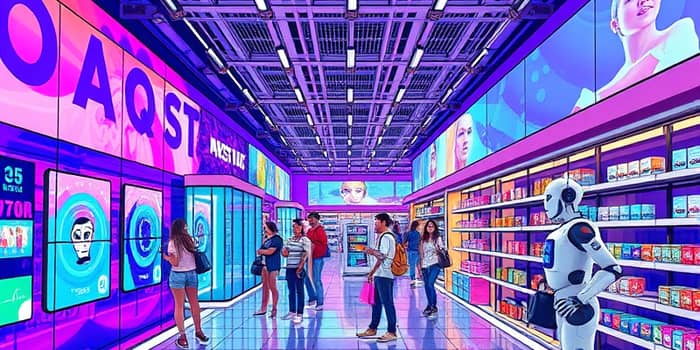
In today’s rapidly evolving marketplace, retailers face a pivotal moment. The traditional divide between brick-and-mortar stores and online platforms has blurred, demanding a bold reimagining of how businesses engage customers, manage inventory, and harness technology. Those who adapt can not only survive but also flourish.
Over the last decade, global ecommerce has surged ahead, outpacing in-store growth by more than double. Today, over one-third of the world’s population shops online, and projections indicate that global ecommerce sales will reach $7.4 trillion in 2026. With factors such as geopolitical instability and inflation reshaping consumer priorities, retailers must embrace a single unified system across channels to eliminate silos and deliver consistent experiences.
Regional markets showcase varied trajectories. China, the United States, and Western Europe together account for over $5.17 trillion in ecommerce sales. Meanwhile, fast-growing regions like Southeast Asia and Latin America are experiencing double-digit annual growth, underscoring the importance of agile strategies that can pivot across diverse markets.
A clear understanding of prevailing trends can guide strategic investments. By 2026, the landscape will be defined by:
These trends represent the converging forces of technology and consumer expectations, urging retailers to move decisively toward unified, data-driven models.
Quantifying the scale of digital transformation’s impact can help allocate resources effectively. Key forecasts include:
Beyond raw figures, growth rates in regions like India (14.1% CAGR) and Brazil (over 13.6% CAGR) highlight lucrative opportunities for retailers who can localize their digital experiences and supply chain operations.
Implementing cutting-edge technology requires disciplined planning and execution. Core initiatives include establishing a single source of truth for inventory, automating returns across channels, and deploying conversational AI assistants to handle customer inquiries at scale. In-store innovations further ensure that physical locations complement online capabilities:
Edge computing and computer vision further enhance predictive maintenance and loss prevention, while AR-powered shopping modules can increase conversion rates by up to 94%.
Retailers must align with evolving shopper expectations to maintain relevance. Recent findings reveal that:
By acknowledging these preferences, businesses can refine fulfillment networks, optimize mobile interfaces, and craft interactive in-store moments that resonate with tech-savvy audiences.
Effective measurement is critical for iterative improvement. Retail leaders should track metrics such as:
Inventory accuracy and discrepancies per SKU, ensuring stock levels remain aligned with customer demand. Conversion rates across digital and physical channels reveal friction points, while the Average Order Value (AOV) post-AR engagement quantifies upsell potential. BOPIS (Buy Online, Pick Up In-Store) fulfillment times and return rates further indicate operational efficiency and customer satisfaction.
By analyzing time-to-purchase and fulfillment step durations, teams can pinpoint bottlenecks and prioritize automation or service enhancements where they deliver the greatest impact.
Navigating digital transformation demands a cohesive strategy, combining technology investments with organizational alignment. Key recommendations include:
Embracing these strategic pillars can empower retailers to not only withstand macroeconomic pressures but also chart new paths for growth in an increasingly competitive digital landscape.
As we look beyond 2026, the convergence of advanced AI, immersive technologies, and unified commerce architectures will redefine the retail experience. Retailers that champion innovation, remain attuned to consumer needs, and foster a culture of continuous improvement will stand out, transforming challenges into lasting competitive advantage.
References