Search
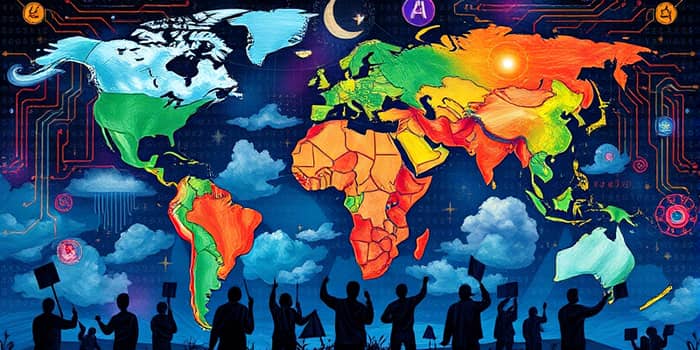
In the past decade, the global risk landscape has transformed dramatically. No longer confined to economic downturns after 2008, today’s threats span geopolitical, societal, environmental, and technological domains. Organizations and individuals must understand this evolution to navigate uncertainty and build resilience.
Between 2013 and 2017, risk experts observed a stabilization of five core categories, even as roughly twenty individual risks vanished or merged into broader clusters. Early concerns about fiscal crises and market volatility gave way to more complex challenges. Man-made environmental threats receded slightly, while natural disasters and extreme weather events surged in frequency and severity.
Technological vulnerabilities rose sharply alongside the internet’s expansion. Data breaches, cyberattacks, and fraud incidents became critical points of failure for businesses and governments. Meanwhile, geopolitical tensions—state collapse, terrorism, illicit trade, and forced migration—escalated, driven in part by a growing failure of global governance to address cross-border crises.
This period marked a fundamental shift: from isolated economic hiccups to increasingly networked global threats. Risks no longer fit neatly into silos; they interacted, amplified one another, and demanded coordinated responses.
As we look to 2026, five major risk categories dominate expert concerns:
Beyond these, other emerging threats demand attention:
Each category interconnects. For instance, an economic downturn can fuel societal unrest, while geopolitical tensions may disrupt supply chains, intensifying resource shortages.
Risk management has progressed from reactive fire-fighting to proactive governance and strategic foresight. Traditional frameworks, focused on identification and mitigation, are giving way to enterprise-wide approaches that embed risk considerations into every decision.
Modern organizations deploy agile, cross-functional teams equipped with real-time analytics and AI-driven insights. Scenario planning now spans short-term crises like regional conflict and long-term threats such as climate change. This blend of horizons acknowledges that long-term risks become immediate when early indicators go unaddressed.
Key shifts include:
These trends underpin a more resilient and adaptive posture, essential in an age of volatility.
Resilience is not a static attribute but a dynamic capability. To thrive amid systemic and interconnected challenges, organizations and communities must cultivate flexibility, redundancy, and foresight.
By embedding these practices, entities can transform risks into opportunities for innovation and growth.
The evolution of global risks from 2013 to 2025 illustrates a world in flux. Economic shocks, geopolitical rivalries, technological upheavals, and climate threats now intertwine in complex ways. Yet within this uncertainty lies potential: for more robust governance, deeper collaboration, and transformative innovation.
Embracing resilient and adaptive strategies empowers us to navigate the unknown, safeguard our communities, and build a future that is both secure and sustainable.
References