Search
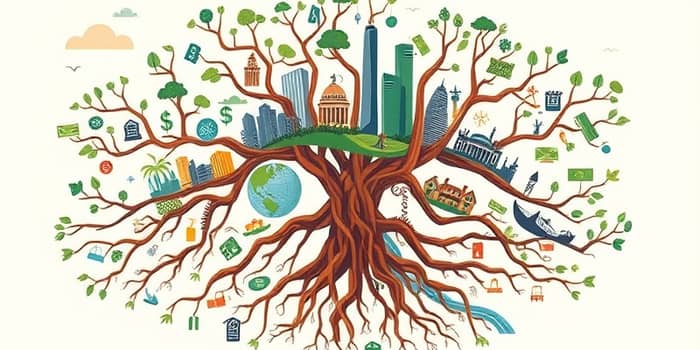
In an increasingly globalized world, debt no longer resides in isolation. From sovereign bonds to household loans, the various strands of borrowing weave together into a single web that shapes economies, societies, and environments. Understanding this complex "ecosystem of debt" is essential to designing solutions that promote resilience, fairness, and sustainability.
Debt functions much like a living ecosystem, where a disturbance in one part can ripple throughout the whole. A sudden sovereign default can trigger banking crises, depress international capital flows, and undermine corporate financing. Likewise, household distress can weaken local economies and strain social safety nets.
The notion of cross-border financial interdependence highlights how countries are bound together by creditors, trade partners, and investors. A crisis in one emerging market can obligate lenders in Europe or Asia, threatening global stability. Recent research on financial contagion confirms that stress travels along credit channels faster than policymakers can react.
On the front lines of climate change, many developing nations face an acute paradox: they need funds to adapt, but high debt constrains their capacity to borrow. UNCTAD reports that 29 out of 69 lower-income countries are simultaneously at risk from climate shocks and debt distress.
When cyclones, floods, or droughts strike, external borrowing often surges to finance recovery. Yet this reactive financing can entrench a vicious cycle of perpetual vulnerabilities. As debt service absorbs more of the budget, governments lose fiscal space to invest in resilient infrastructure, early warning systems, and social protection.
Moreover, over 70% of public climate finance today takes the form of loans, not grants. This reliance on debt for adaptation deepens the trap, making each future shock costlier both in human and financial terms.
High debt service obligations crowd out spending on vital public goods. Infrastructure projects, healthcare, education, and social safety nets compete for the same finite resources. When debt ratios climb above sustainable thresholds, credit ratings fall, borrowing costs rise, and refinancing risks grow.
Under these conditions, long-term growth suffers. Reduced investment in human capital and green technologies leads to lower productivity, weakening tax revenues and perpetuating economic stagnation. The International Institute for Sustainable Development warns that this dynamic creates persistent economic fragility across regions.
UNCTAD critiques the present debt framework as patchwork and dysfunctional. Sovereign restructurings often drag on for years, with litigation, holdout creditors, and fragmented negotiations delaying relief.
Key deficiencies include the absence of a multilateral legal mechanism for debt relief, lack of transparency in creditor claims, and insufficient incorporation of climate and development objectives. Without a smoother, more inclusive process, countries may avoid necessary restructuring, risking deeper crises later.
Beyond financial claims, humanity incurs an "ecological debt" when it depletes natural resources faster than ecosystems can regenerate. Nations with high public debt often struggle to invest in the green transitions required to restore biodiversity, reduce emissions, and safeguard water and soil.
Failure to address ecological debt undermines long-term economic stability. Overexploitation of forests, fisheries, and minerals erodes the very foundations of productivity. Tying debt restructuring to environmental benchmarks can foster more balanced outcomes.
Developing countries will require massive infusion of funds to adapt to climate change. Estimates by UNEP place annual adaptation needs at:
Meeting these targets through debt-based instruments alone risks perpetuating the debt–climate doom loop. A balanced mix of grants, equity investments, and contingent debt instruments is essential.
A grass-roots perspective on debt management reveals that resilience requires more than macro frameworks. In the private sector, collection and recovery rely on technology, empathetic processes, and adaptive strategies that respond to borrowers’ changing circumstances.
Similarly, sovereign debt systems must focus on preventive measures—early warning, risk-sharing pools, and flexible disbursement triggers—rather than reactive bailouts. Incorporating human rights obligations into restructuring ensures that social and environmental needs remain central.
The ecosystem of debt spans sovereign treasuries, corporate balance sheets, households, and ecosystems themselves. To navigate this complexity, stakeholders must adopt a holistic mindset that recognizes interdependence, vulnerability, and the shared benefits of resilience.
Key takeaways for policymakers and practitioners:
By reimagining debt as an ecosystem—one that must be managed, nourished, and conserved—nations can break free from vicious cycles and build a foundation for sustainable prosperity. Only through integrated solutions that bridge finance, policy, and ecology can we ensure that tomorrow’s generations inherit both fiscal stability and a thriving planet.
References