Search
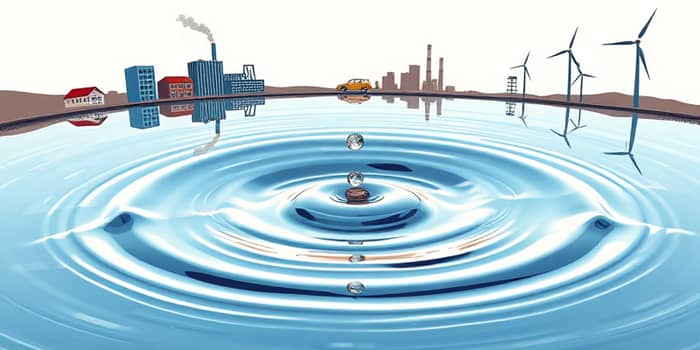
Credit risk extends far beyond a borrower’s balance sheet. While traditional analysis focuses on direct factors like income and collateral, a wider spectrum of indirect credit risk drivers silently reshapes outcomes. Understanding these ripple effects is essential for robust risk management.
In this article, we explore three domains—labor-market precarity, indirect lending relationships, and environmental shocks—to reveal how subtle forces propagate through the financial system. By identifying these second-order dynamics, risk professionals can craft strategies that anticipate uncertainty and foster resilience.
Direct credit risk drivers relate to the borrower’s own characteristics: salary, debt levels, and asset values that lenders assess during underwriting. Indirect drivers originate outside the loan contract, yet they often exert equal or greater influence on performance.
These indirect forces can amplify or dampen credit risk. A sudden policy shift, a vendor’s operational failure, or an extreme weather event may reverberate across portfolios, altering default probabilities and loss severities.
A growing divide between temporary and permanent employment fuels a dual labor market structure that resonates in credit markets. Research shows workers with non-W-2 income face nearly twice the job-loss risk of permanent employees.
This cascade unfolds as follows:
1. Labor market precarity increases income volatility and job-loss probability. 2. Lenders apply stricter underwriting, raising the higher perceived probability of default. 3. Denials and self-selection reduce household borrowing. 4. Lower credit access curtails asset accumulation, widening wealth gaps.
Over time, these dynamics weaken aggregate demand and can feed back into portfolio quality, creating a persistent indirect credit risk cycle.
Credit unions and banks increasingly rely on dealers and vendors to originate and service loans. While this expands distribution, it also introduces counterparty exposures that can reshape portfolio risk.
Weak governance in these programs can trigger a material shift in balance sheet composition. A surge in dealer-originated auto loans, for example, may elevate liquidity strain and compliance exposures if underwriting lapses go unchecked.
Institutions must maintain a comprehensive due diligence program that covers vendor contracts, performance metrics, and exit strategies. By treating non-delegable responsibilities as central, lenders safeguard credit quality against indirect shocks.
Climate change and environmental degradation increasingly factor into credit assessments. Extreme weather, regulatory transitions, and supply-chain disruptions can erode borrower cash flows and collateral values, often with little warning.
Financial institutions are adopting robust climate scenario analysis to map potential losses under various temperature or policy pathways. Stress tests may reveal concentrations in flood-prone real estate or agribusiness loans vulnerable to drought.
Embedding these insights into capital planning and pricing structures helps create portfolios that can withstand environmental shocks, turning a latent vulnerability into an actionable risk management practice.
Organizations can build resilience by acknowledging and integrating indirect factors into their frameworks. Key approaches include:
• Embedding diversify across multiple risk dimensions into portfolio construction to avoid undue reliance on any single sector or counterparty.
• Strengthening vendor oversight and conducting regular operational reviews to detect early signs of underwriting drift.
• Incorporating asset-liability management and liquidity stress tests that consider rapid growth in indirect lending channels.
• Integrating dynamic portfolio rebalancing triggered by shifts in labor market metrics or environmental exposures.
By moving beyond borrower-centric models and mapping these ripple effects, lenders can anticipate emerging vulnerabilities and adapt in real time.
Credit risk is far more than a snapshot of a single borrower’s finances. It is a living network of interactions that extend through labor markets, vendor ecosystems, and the natural environment. Embracing this broader perspective allows institutions to shore up defenses, seize market opportunities, and foster a more stable financial system for all stakeholders.
References