Search
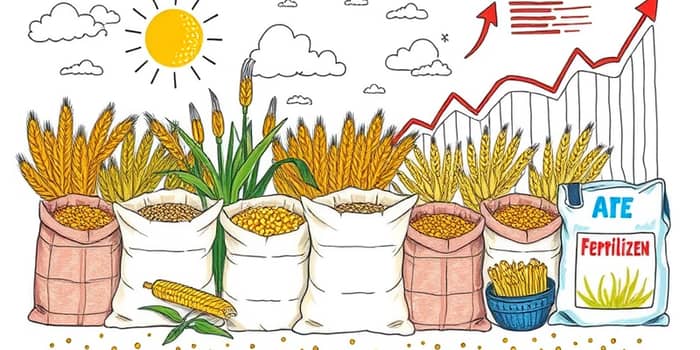
Global agricultural markets have long been a barometer for economic stability and human well-being. As 2026 unfolds, the interplay between supply constraints, demand pressures, and external shocks continues to test the resilience of millions worldwide. This article delves into the history, current pressures, regional consequences, root causes, and actionable strategies to reduce volatility and strengthen food security.
Beginning with the 2007-2008 period, food prices soared to 30-year highs in summer before collapsing just months later. This boom-bust cycle exposed the fragility of global supply chains when subject to sudden demand shifts or production disruptions. Analysts identified commodity index traders amplifying speculative bets as a key driver of these swings, particularly in maize and wheat futures.
Since then, prices have remained elevated relative to pre-2007 levels, fluctuating on the back of weather events, political decisions, and evolving consumption patterns. The development of the Excessive Food Price Volatility Early Warning System has enabled real-time tracking of global price spikes, offering policymakers critical lead time to implement mitigating measures.
When Russia invaded Ukraine in 2022, the conflict triggered a renewed wave of financial speculation, with long positions on wheat futures approaching the peaks of 2007-08. That surge demonstrated how geopolitical crises can swiftly rewire market expectations and escalate prices, even when physical supplies remain available. The ongoing integration of global financial markets means that such shocks are transmitted with unprecedented speed and intensity.
As of March 2026, a confluence of factors has reignited concerns over price instability. Conflicts in the Middle East and Eastern Europe have disrupted fertilizer exports and strained energy supplies, while record heatwaves and unpredictable rainfall patterns have reduced crop yields across key producing regions. Financial markets remain jittery, with algorithmic trading contributing to rapid price swings.
Climate change has also introduced new uncertainties. Unseasonal droughts in North America and unexpected flooding in Southeast Asia have eroded carryover stocks, prompting traders to adjust their expectations in real time. These environmental risks are compounded by supply chain bottlenecks, such as port congestion and labor shortages, which can delay shipments and add surcharges that ripple through the pricing of grains and oilseeds.
The latest data from the World Bank highlights these trends in the following table:
These figures underline the persistence of high costs for consumers and producers alike. Notably, fertilizer prices have surged by nearly half, driven by disruptions in fertilizer manufacturing and shipping through contested waterways.
The human toll of price volatility is stark. Currently, 363 million people are at risk of acute hunger, with an additional 318 million already facing crisis-level food insecurity. In East and Southern Africa alone, 87 million individuals struggle to secure basic nourishment, and projections indicate a further 17% increase by mid-2026 if current trends persist.
West and Central Africa are similarly imperiled, with up to 52 million at acute risk and a potential 21% rise in the coming months. Countries such as Sudan, which imports 80% of its wheat, and drought-stricken Somalia face cascading impacts as prices surge and availability declines. Globally, low-income nations experience food inflation above 5%, eroding livelihoods and fueling social unrest.
In Asia, smallholder farmers face steep input cost increases, forcing many to reduce planting areas or switch to lower-yield crops. Inflationary pressures in countries like Bangladesh and the Philippines have led to public protests and calls for government intervention. Even in middle-income economies, higher food bills are squeezing household budgets and constraining consumer spending on non-food goods.
While individual factors can be isolated conceptually, in practice they interact in complex ways. For example, a weather-induced crop shortfall may trigger export restrictions, which in turn fuel speculative trading and prompt hoarding, further amplifying price spikes. Addressing volatility thus requires a holistic understanding of the market ecosystem.
Understanding the drivers of volatility is essential to crafting effective responses. The following factors interact dynamically to produce destabilizing price movements:
International coordination is crucial. Multilateral agreements aimed at reducing export restrictions and promoting open trade can help stabilize markets. Platforms like the G20 Agriculture Ministers’ Forum provide opportunities for collective action, from harmonizing quality standards to aligning biofuel mandates with food security objectives.
While the challenges are multidimensional, a coordinated policy approach can reduce both price levels and volatility. Actionable measures include:
Governments and international institutions must tailor these tools to local contexts, ensuring that interventions do not inadvertently create distortions or disincentivize private sector investment.
The volatility of agricultural markets is not an immutable fact of life. By adopting forward-looking agricultural policies that integrate technological innovation, robust data systems, and targeted safety nets, stakeholders can dampen extreme price swings and safeguard food security. The road ahead demands collaboration across borders and sectors, but the potential rewards—stabilized markets, resilient communities, and nourished populations—are well worth the effort.
Ultimately, the goal is to create a system where shocks are absorbed smoothly rather than transmitted harshly. By aligning short-term relief measures with long-term capacity building, the global community can ensure that the basic right to food is protected, even in the face of unprecedented challenges.
References