Search
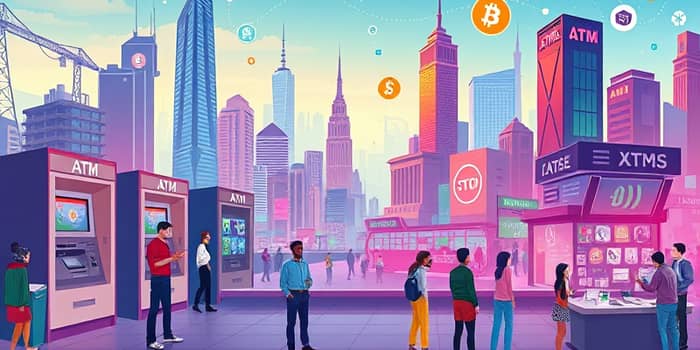
From the first clunky ATMs to today’s AI-driven platforms, financial technology has reshaped how we manage money, invest, and build businesses. This journey inspires us to welcome innovation and stay agile as the next breakthroughs emerge.
By understanding this evolution, individuals, startups, and established firms can harness emerging tools to drive inclusion, efficiency, and sustainable growth in every corner of the globe.
Fintech’s roots stretch back before 1967, when early attempts at digitalizing finance laid the groundwork for future revolutions. Dubbed Fintech 1.0, this era relied on analogue ledgers and manual processes.
With Barclays’ launch of the ATM in 1967, the sector entered Fintech 2.0, ushering in electronic networks like SWIFT and NASDAQ. Yet by the early 2000s, digital experiments remained niche, with scrappy startups debating the promise of e-wallets and early cryptocurrencies.
The COVID-19 pandemic accelerated adoption, collapsing boundaries between banks and fintechs. Suddenly, digital payments, lending, wealth management, insurance, capital markets, and cryptocurrency blended into a single continuum of innovation.
Between unbundling specialized services and embedding finance into every app, fintech has progressed through distinct waves:
Regionally, Africa led with mobile money pioneers—M-Pesa, MTN MoMo, Wave—transforming everyday transactions for millions. In Asia, super-apps bundled banking, commerce, and social interaction into single ecosystems.
Today’s digital wallets are no longer mere transaction repositories. They serve as dynamic financial hubs that blend AI-driven guidance, automated savings, embedded credit, micro-investing, and parametric insurance into a seamless user experience.
Open banking frameworks empower third-party developers to build atop traditional banks’ APIs, enabling real-time P2P transfers, budget tracking, and personalized offers without leaving favorite retail or social platforms.
Embedded finance has proliferated into ride-hailing, e-commerce, and content marketplaces, turning every digital touchpoint into an opportunity for frictionless payments and financial inclusion.
Instant, real-time rails reduce settlement times, unlock just-in-time funding, and empower small businesses with reliable cash flow. Generative AI agents are poised to become financial co-pilots, delivering personalized advice, automating purchases, and even negotiating dynamic payment terms.
Meanwhile, digital IDs and tokenized credentials leverage biometric verification to curb fraud and streamline onboarding, while stablecoins and CBDCs edge closer to mainstream acceptance, promising regulated, programmable money.
To thrive in this era of rapid change, organizations and individuals can take concrete actions today:
For entrepreneurs, the path forward lies in identifying niche pain points—whether micro-lending for thin-file SMEs or supply-chain financing for underserved markets—and crafting user-centric solutions that integrate seamlessly into daily routines.
Policymakers play a crucial role by establishing balanced regulations like PSD3, promoting data portability, and ensuring robust cybersecurity standards that build consumer trust without stifling invention.
The evolution of fintech from analog ledgers to embedded, AI-powered ecosystems demonstrates the power of innovation to expand access, efficiency, and resilience in global finance. By studying past waves, embracing emerging trends, and taking practical steps today, we can unlock a future where financial services are truly universal and tailored to every individual’s needs.
As we stand on the cusp of quantum finance, ambient banking, and super-app battles, one truth endures: the most successful players will combine technological prowess with a steadfast commitment to inclusion and trust.
References