Search
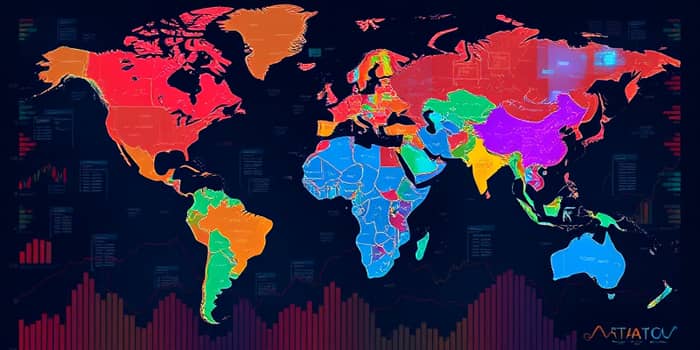
As global markets decouple in the wake of post-pandemic shocks and shifting geopolitical tides, investors face both challenges and unprecedented pathways. Understanding the evolving landscape is crucial for navigating rotating market leadership and capturing value across regions.
Since 2022, the long-standing synchronicity among major equity indices has unraveled. Once characterized by post-GFC high correlations, markets now react to localized stimuli: deglobalization, supply chain fragmentation, and renewed geopolitical tensions.
This breakdown in correlation has widened return dispersion, meaning that a US-centric portfolio no longer offers the same built-in resilience. Investors seeking broad alpha sources must look beyond mega-cap technology to harness growth in undervalued regions.
Bond markets mirror these trends, with sovereign yields diverging sharply as countries pursue independent monetary and fiscal policies. Against this backdrop, diversification is less of a buzzword and more of a strategic imperative.
Differentiated growth drivers are emerging across developed and emerging markets. From Japan’s automation renaissance to Latin America’s demographic tailwinds, each region offers distinct catalysts for returns.
In Q1 2026, value and momentum led performance across regions, reflecting a shift away from volatility and growth extremes toward stable yield and quality. This rotation underscores the need to adopt a nimble, regionally diversified approach.
Amid rising dispersion, investors face a choice: concentrate in US mega-caps or embrace a systematic global equity case. Each approach carries distinct trade-offs.
Active management can tilt toward undervalued markets, while factor strategies emphasize yield, value, and momentum. For bond portfolios, diverging policies suggest blending global sovereigns with credit instruments to cushion volatility.
Risk management remains paramount. Key headwinds include policy divergence, trade tensions, and the potential for sharper-than-expected yield volatility in the world’s largest economies.
The era of homogeneous global markets has given way to a mosaic of opportunities. Investors who recognize and adapt to diverging regional trends can unlock new sources of alpha and reduce concentration risk.
By combining robust US growth with targeted exposure to Europe’s industrial revival, Japan’s corporate transformation, and the dynamic trajectories of emerging markets, portfolios can achieve a balanced, resilient stance. In this landscape of divergence, informed strategy and disciplined execution pave the way toward long-term success.
References