Search
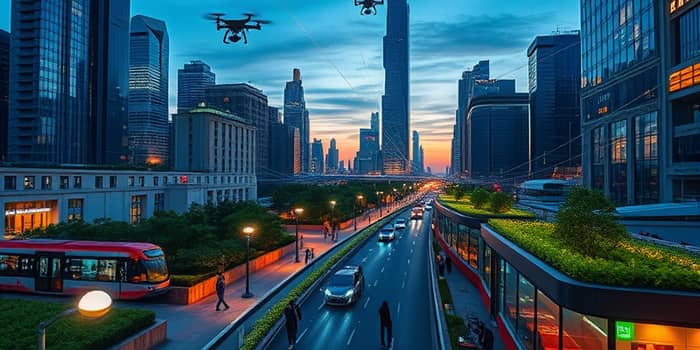
The urban landscape is undergoing a profound transformation as cities around the globe embrace digitalization to enhance livability, resilience, and economic vitality. By leveraging interconnected technologies and citizen-centric design, municipal leaders can foster inclusive growth, reduce environmental impact, and build communities that thrive under pressure.
Smart cities represent more than a collection of gadgets; they embody integrated urban management that connects infrastructure, services, governance, and people through data and connectivity. This transformation has shifted from pilot projects to production-scale deployments, delivering measurable community outcomes in public safety, mobility, and energy efficiency.
Investing in smart cities is critical because urban areas concentrate population, talent, and capital. According to Frost & Sullivan, by 2025 smart city initiatives will create a business opportunity exceeding USD 2 trillion. When cities invest in technology, they not only improve the daily lives of residents but also strengthen their global competitiveness and resilience to shocks.
At the heart of every smart city are four core technology pillars that, when combined, unlock new levels of efficiency and insight.
These technologies come together on a robust connectivity backbone—5G networks and fiber-optic infrastructure—that supports millions of devices with minimal latency. As a result, cities like Singapore have reduced emergency response times by 25% using real-time digital twin simulations.
Climate-smart initiatives are essential to reduce carbon footprints and build urban resilience. In Zaragoza, Spain, the goal to reach climate neutrality by 2030 is enabled by advanced sensor networks and renewable energy communities. These CO₂-free energy transitions harness shared self-consumption models that can deliver collective savings exceeding 30%.
Mobility underpins quality of life and economic success. A holistic urban mobility strategy goes beyond adding sensors; it integrates physical infrastructure—public transit, bike lanes, intermodal hubs—with digital platforms for routing and real-time updates. According to the IMD Smart City Index 2025, European cities could cut public transport emissions by up to 35% while boosting operational efficiency and rider satisfaction.
Beyond technology, successful smart cities require innovative governance frameworks. Urban sandboxes—regulatory environments that permit controlled experimentation—allow cities like Barcelona to pilot autonomous vehicles and delivery drones under flexible guidelines. These testbeds produce data and best practices that inform scalable policies.
Engaging citizens in co-creation fosters trust and adoption. Public–private partnerships, open data portals, and participatory budgeting ensure that investments align with community needs. By cultivating public-private collaboration and promoting digital literacy, cities can democratize access to services and empower residents to shape urban futures.
Leaders seeking to harness smart city potential can follow a phased, outcome-oriented approach:
By structuring investments around community priorities and leveraging open standards, cities can minimize risks and maximize social returns. The transition to integrated, data-driven urban management is not a one-time event but an ongoing journey of continuous improvement.
Smart city investments are more than a technology play; they are an investment in human potential and ecological stewardship. When digital innovation meets thoughtful governance, cities become laboratories of resilience—capable of withstanding climate extremes, economic shifts, and social change.
As we move toward 2030 and beyond, the most competitive and compassionate cities will be those that harness the power of data, technology, and citizen engagement to create sustainable, inclusive societies. The time to invest in urban innovation is now, for the future of our cities—and of our planet—depends on the choices we make today.
References