Search
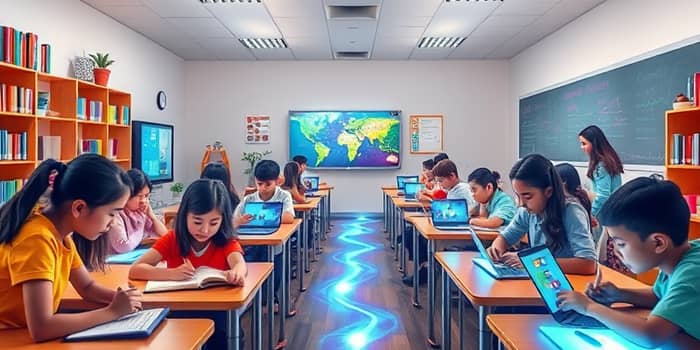
Traditional classrooms often adopt a uniform approach, but every learner brings unique strengths and needs. It’s time to shift toward an education system that truly values the individual.
By treating learning as an investment rather than an obligation, we unlock possibilities that benefit both individuals and society.
Personalized education revolutionizes how knowledge is delivered, paced, and assessed. It creates an environment where learners take charge of their journeys.
When education aligns to each learner’s context, we move beyond rote memorization to meaningful growth. This approach cultivates self-directed lifelong learners who can adapt in a rapidly changing world.
Benefits for students include:
For educators and systems, personalized learning provides data-rich profiles that reveal emerging needs and successes. Teachers transition from lecturers to mentors, designing experiences that build trust and encourage exploration.
At the societal level, customized learning pathways represent a human capital investment strategy. By unlocking latent talents, we enhance productivity, reduce dropout rates, and align skills with real-world demands.
Emerging technologies and pedagogical innovations are converging to make personalized education more accessible and effective.
The EdTech sector fuels these trends, with investments projected to grow from $142 billion in 2024 to over $350 billion by 2030. This scale of funding drives sophisticated analytics, virtual reality experiences, and global collaboration networks.
Effective implementation requires clear strategies and measurable goals. Below is a snapshot of projected market growth that underscores the urgency and scale of this transformation:
To maximize returns on educational investment, stakeholders should:
1. Develop comprehensive learner profiles using secure, interoperable data systems.
2. Equip teachers with training in adaptive pedagogy, coaching techniques, and data analysis.
3. Integrate AI tools responsibly, ensuring human oversight and ethical use of learner data.
4. Foster partnerships between schools, industry, and community organizations to align curricula with workforce needs.
5. Evaluate outcomes continuously, using both quantitative metrics and qualitative feedback from learners and educators.
Personalized education is more than a pedagogical choice—it’s a commitment to human potential. By tailoring learning to each individual’s needs, interests, and goals, we cultivate resilient, innovative citizens ready to tackle tomorrow’s challenges.
Investing in personalized learning pathways is an investment in our collective future. Let us embrace this strategy with creativity, compassion, and a shared vision for unlocking every learner’s promise.
References