Search
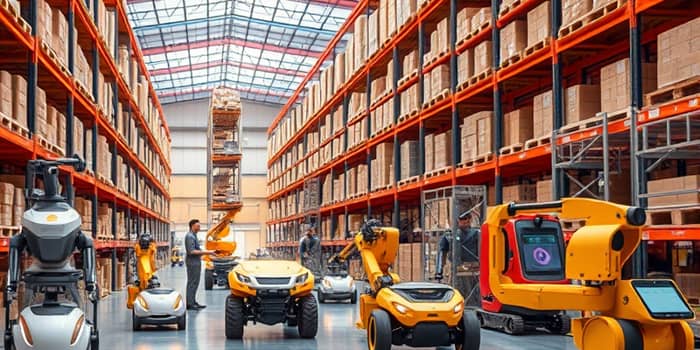
In an era defined by rapid e-commerce growth, labor shortages, and unpredictable disruptions, logistics leaders are turning to robotics to stay competitive. This article explores how automation technologies reshape supply chains, delivering speed, accuracy, and resilience.
Warehouse automation has evolved from a futuristic concept into an operational imperative. Shoppers demand next-day or same-day delivery, while labor markets struggle to fill critical roles. Companies must adapt to maintain service levels and profitability.
We now stand within the Fourth Industrial Revolution, marked by connectivity, where robotics serves as the foundation for autonomous, self-optimizing, data-driven supply chain ecosystems. As a result, warehouse automation is shifting from competitive advantage to basic necessity, enabling businesses to react swiftly to market fluctuations.
Investment in logistics automation is surging. Industry analysts project warehouse robot shipments to grow up to 50% annually through 2030, while overall warehouse automation climbs more than 10% each year. Many firms are earmarking upwards of 25% of capital expenditures for automation, with logistics leading all sectors at over 33%.
Early adopters report 30–50% reductions in operational costs and dramatic improvements in delivery speed and reliability. Error rates in picking and shipping often fall from double-digit percentages to single digits, demonstrating a clear return on investment.
Modern warehouses deploy a spectrum of robotic solutions, each tailored to specific tasks and environments. Understanding these technologies helps companies select the right mix for their operations.
Autonomous Mobile Robots (AMRs) navigate freely using sensors, cameras, LIDAR, and AI. They excel at goods-to-person picking, dynamic route optimization, and collaborative transport without fixed infrastructure.
Automated Guided Vehicles (AGVs) follow predefined paths via magnetic tape or embedded markers. While less flexible than AMRs, they reliably move pallets and heavy loads along set routes in high-volume, repetitive flows.
Automated Storage & Retrieval Systems (AS/RS) leverage cranes, shuttles, and cube-based systems to maximize vertical storage density. Integrated with warehouse management software, they deliver high precision and rapid retrieval for buffering and staging.
Robotic Picking Systems use computer vision and advanced grippers to pick items from bins, conveyors, or shelves. Although challenged by item variety, ongoing machine learning advances are steadily improving pick rates and reliability.
Collaborative Robots (Cobots) are designed to work safely alongside humans. They assist in pick-and-place, packaging, and kitting tasks, boosting human productivity while minimizing the need for safety cages.
Robotics hardware is only part of the story. The true power emerges when automation is combined with digital technologies that drive intelligence and coordination.
Artificial Intelligence & Machine Learning power demand forecasting, warehouse optimization, and adaptive route planning. By analyzing historical sales, promotions, and external factors, AI reduces stockouts and overstocks while maximizing throughput.
Predictive maintenance reduces unplanned downtime by applying ML models to sensor data—vibration, temperature, motor currents—and scheduling repairs before failures occur. This proactive approach preserves uptime and lowers maintenance costs.
Seamless connectivity with Warehouse Management Systems (WMS), Enterprise Resource Planning (ERP), and Transportation Management Systems (TMS) is critical. Adopting seamless interoperability and open APIs ensures modular scalability and streamlined data flow across platforms.
Robotics delivers value at every stage of the supply chain, from inbound receiving to last-mile delivery. Key applications include:
Inbound logistics benefits from dock-to-stock automation, where AGVs and AMRs transport pallets directly from docks to storage zones, while automated sortation scans barcodes and RFID tags to speed put-away. Warehousing leverages AS/RS for high-density inventory, alongside AMRs that shuttle totes to pick stations, significantly reducing walking time for associates.
In outbound operations, robotic picking systems handle high-volume e-commerce orders, and cobots assist workers with packaging and labeling. Emerging drone technologies perform cycle counting, scanning barcodes across tall racks with precision and speed. Last-mile innovations such as sidewalk delivery robots and autonomous vans are beginning pilot programs to extend automation beyond the warehouse walls.
As robotics costs decline and capabilities advance, adoption will accelerate. Industry forecasts predict robotics as the cornerstone of future-proof supply chains, providing the agility and responsiveness needed in volatile markets.
To implement effectively, organizations should:
By embracing robotics strategically, businesses can build high-density storage and retrieval precision, minimize manual errors, and respond to customer demands with unmatched speed. Ultimately, Warehouse automation shifting from advantage to necessity will define supply chain leaders of tomorrow.
References