Search
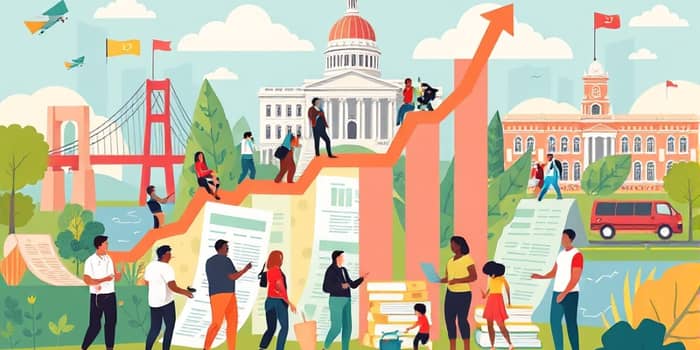
Fiscal policy stands at the heart of how governments steer economic tides, balancing growth, stability, and the public welfare. By leveraging taxation, spending, and transfers, policymakers can cushion recessions, rein in inflation, and chart a path toward sustainable prosperity.
At its essence, fiscal policy describes the government’s deliberate use of revenue and expenditure tools to influence macroeconomic outcomes. From funding vital infrastructure to adjusting tax rates, these levers work in concert to achieve targets like full employment and price stability.
These pillars work through a multiplier effect on GDP, where initial spending prompts further consumption and investment, amplifying the policy’s reach across the economy.
Fiscal actions influence output both directly, through government purchases, and indirectly, by altering households’ and firms’ spending capacity. Changes in tax rates and transfer programs can swiftly shift consumption patterns.
By measuring the gap between actual GDP and a counterfactual scenario (where policy remains at pre-crisis levels), economists can isolate fiscal impact. For example, during the COVID-19 crisis, stimulus measures added roughly 4% to output in 2020 Q2–Q4.
History offers vivid illustrations of fiscal policy at work, showing its power—and its limits—in real-world crises.
Each episode underscores the countercyclical nature of modern fiscal policy: aggressive support in downturns, followed by restraint as recovery takes hold.
While fiscal policy wields the budgetary hammer, monetary policy adjusts interest rates and money supply. Both aim to stabilize output and control inflation, but they operate through distinct channels and timelines.
Fiscal decisions involve lengthy budget processes—proposal, approval, implementation—leading to longer lags. Central banks can act more swiftly, yet often need fiscal backing to maximize impact, as during the pandemic when stimulus spurred demand while rates remained low.
One central objective of fiscal policy is to smooth business cycles. During recessions, expansionary measures lift output and reduce unemployment. In booms, contractionary steps help contain inflation.
Automatic stabilizers—like progressive taxes and welfare programs—activate without new legislation, accounting for about half of stabilization over the past four decades. Discretionary actions, such as targeted relief bills, supply the rest.
Despite its potency, fiscal policy faces constraints. Rising federal net debt—exceeding 100% of GDP by 2025—raises alarms over sustainability. Experts warn that current US fiscal policies are unsustainable in the long run without revenue increases or spending cuts.
Risks include higher inflation if stimulus outpaces productive capacity and rising interest costs as borrowing grows. Dynamic models suggest that extending tax cuts may yield only modest growth, while adding to long-term deficits.
Projections indicate fiscal measures will be neutral on GDP by 2026, assuming no new legislation, with potential minor boosts in later years if certain provisions extend. Yet maintaining fiscal space for future crises remains a pressing concern.
Fiscal policy’s reach extends far beyond budget lines; it shapes livelihoods, business climates, and the nation’s resilience. As economies navigate post-pandemic recovery and global uncertainties, thoughtful coordination of spending, taxation, and transfers will prove vital.
Policymakers must weigh short-term needs against long-term sustainability, ensuring that emergency measures do not mortgage future growth. By harnessing the full toolkit—automatic stabilizers, targeted relief, and prudent budgeting—governments can guide economic trajectories toward inclusive, enduring prosperity.
References