Search
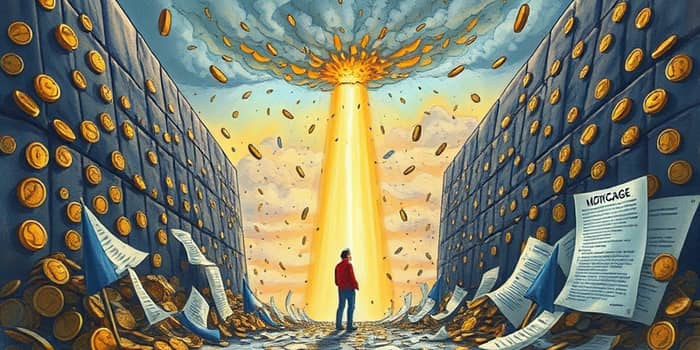
Loan defaults don’t occur in a vacuum. They emerge from a complex interplay of financial pressures, life events, and economic forces. By understanding these dynamics, lenders, policymakers, and borrowers can build strategies to minimize risk and foster resilience.
Research consistently highlights two primary drivers of mortgage default: negative equity and illiquidity. When a homeowner’s outstanding debt exceeds the property value, or when credit-card utilization spikes, the probability of default rises sharply.
The marginal effects of these factors are striking. Rising from a combined loan-to-value (CLTV) ratio below 50 to above 120 elevates default risk by 1.3 percentage points per quarter. Similarly, high credit-card utilization yields comparable sized marginal effects. These forces interact: under high CLTV, liquidity strains become even more acute, peaking when CLTV nears 100 percent.
Surveys reveal that nearly all defaulters cite a personal financial disruption—unemployment, health crises, or divorce—rather than pure strategic motives. In fact, defaults purely driven by underwater mortgages are exceedingly rare. The majority arise under double-trigger conditions where both liquidity and equity stress converge.
Beyond broad triggers, individual attributes shape default likelihood. High debt-to-income ratios, longer loan terms, and elevated interest rates increase vulnerability, while shorter terms and lower interest reduce it. Employment tenure and stable income act as buffers against shocks.
Demographics also play a role. Divorced, widowed, or separated individuals are nearly twice as likely to default compared to married peers. Borrowers with disabilities face 1.5 times higher risk due to income volatility and employment gaps. Non-completion of education, especially among online-only students, correlates strongly with higher student loan defaults.
Economic cycles exert powerful influence. Rising unemployment, higher volatility indexes, and economic policy uncertainty elevate default rates, while GDP growth and robust housing markets mitigate them. Consumer confidence and local average incomes emerge as key predictors when incorporated into machine-learning models.
Systemic shocks can cluster defaults in certain industries or regions. Loans from large banks to micro and small firms show correlated failures during downturns, driven by sectoral crises and lax lending standards.
Loan agreements detail several default types that extend beyond missed payments. Covenant breaches—such as falling below minimum liquidity ratios or violating debt service coverage—can trigger accelerations. Negative covenants, including unauthorized asset sales or changes in control, add further default pathways.
Event-driven defaults occur when express triggers, like regulatory changes or corporate restructurings, activate acceleration clauses. These mechanisms underscore how contractual design intertwines with economic and personal drivers.
Academic models have evolved from single-trigger frameworks to sophisticated double-trigger life event models that capture both equity losses and cash-flow shocks. Survival and frailty models calculate instantaneous hazard rates of default, while machine-learning approaches incorporating macro variables deliver robust predictive models with macro integration.
Policy responses must reflect these insights. Mortgage relief programs that address income shocks—through unemployment benefits or forbearance—can prevent liquidity-driven defaults. Opposition to strategic default is bolstered by evidence that equity-only triggers are uncommon; support should focus on holistic risk management and early intervention.
Borrowers and lenders alike can deploy targeted tactics to reduce default risk:
Early identification of at-risk borrowers—through alerts on rising CLTV or utilization spikes—enables timely outreach. Financial counseling, loan modifications, and contingency planning equip households to navigate downturns without resorting to default.
By acknowledging the interplay of equity and liquidity stress, stakeholders can craft solutions that address root causes, not just symptoms. This comprehensive approach mitigates losses, preserves homeownership, and strengthens financial stability.
In the battle against loan default, knowledge is the best defense. Recognizing the triggers, refining underwriting, and offering tailored support will foster resilience in an ever-shifting economic landscape.
References