Search
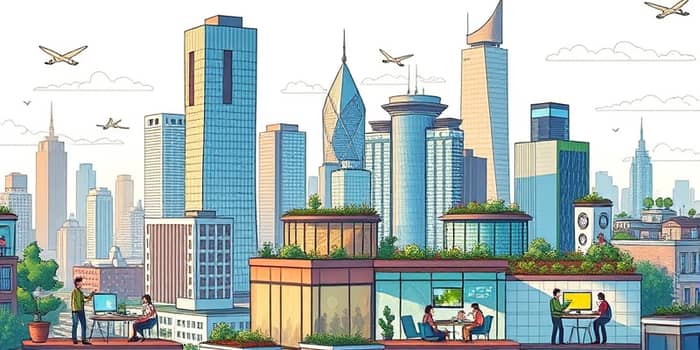
The way we work has undergone a profound transformation. Remote and hybrid models are redefining office demand, urban planning, and investment strategies.
The pandemic acted as a catalyst, prompting organizations to reconsider how and where work happens. Retail foot traffic in central business districts plummeted, residential markets in suburbs boomed, and municipal revenues faced new pressures. With remote work now embedded in corporate DNA, the ripple effects extend beyond office walls, influencing everything from transit planning to community development.
In 2019, the average office worker occupied around 150-200 square feet of workspace, resulting in over 17,500 square feet for a 100-person firm. Occupancy rates hovered at an industry-high 95.3%, reflecting a reliance on centralized headquarters. Four years later, that figure fell to 71.3%, marking a 25% decline as remote work adoption surged from 9% to 32% among office employees. Today, nearly 2 billion square feet of traditional workspace stands empty, a stark contrast to the bustling pre-pandemic environment.
These shifts underscore the emergence of underutilized office space post-pandemic and demand a reimagining of commercial real estate (CRE). Landlords and developers face mounting pressure to pivot—from long-term leases to agile, short-term agreements that align with evolving tenant needs and corporate cost-efficiency goals.
Local economies that once thrived on daily commuter spending are adapting to these seismic shifts. Coffee shops, lunch vendors, and service providers in dense urban centers have pivoted to delivery models or downsized to align with the reduced in-office population. This realignment underscores a broader societal transition—work is no longer tethered to a single location.
Hybrid work is rapidly becoming the normative approach. Organizations across industries are moving to hub-and-spoke network with regional hubs that balance a flagship downtown headquarters with regional satellite offices. Such strategies cater to employee preferences—63% of remote and 54% of hybrid workers prioritize fast internet above all else, while 28% view public transit access as key to their in-office days.
As companies negotiate their real estate commitments, flexibility is paramount. Many are adopting hoteling and hot-desking systems, which allow seat-sharing and on-demand booking to maximize utilization and foster spontaneous collaboration.
Interestingly, demand patterns vary by frequency. Between 2019 and 2023, in-office demand fell 41% for employees seeking one day in the office per week, while those willing to come four or five days saw a slight uptick. This nuanced behavior signals that a one-size-fits-all mandate could backfire, emphasizing the need for personalized work policies that respect individual preferences and tasks.
Facing millions of square feet in sublease, property owners are exploring adaptive reuse as a creative remedy. Underperforming offices can be converted into residential units, last-mile logistics hubs, or flexible learning centers, injecting fresh economic vitality into urban cores and alleviating housing shortages.
By partnering with municipalities, developers can unlock zoning variances and public-private funding to drive regeneration. This approach not only diversifies revenue streams but also fosters inclusive, mixed-use developments integrating living work leisure that sustain foot traffic.
Several cities have already launched pilot projects converting vacant office towers into affordable housing and community centers. In one landmark case, a former Class-A office building was transformed into 200 micro-apartments with co-working lounges and rooftop gardens. Such success stories highlight the potential to revitalize dormant assets and breathe new life into urban districts.
Technology is the linchpin of tomorrow’s workplace. Buildings are becoming intelligent ecosystems, leveraging sensors, data analytics, and AI to optimize energy usage, space allocation, and tenant satisfaction. Forward-thinking landlords harness real-time insights to tailor environments—adjusting temperature, lighting, and air quality based on occupancy patterns.
Emerging solutions like digital twin simulations enable scenario planning, guiding decisions on layout revisions, amenity additions, and workflow enhancements. Integrating such tools yields energy efficiency and tenant analytics solutions that reduce operational costs while elevating the occupant experience.
Looking ahead, digital connectivity will deepen. 5G networks and edge computing promise faster data transfer, enabling immersive virtual collaboration and augmented reality tours of office spaces. Building management systems will evolve to predict maintenance needs, reducing downtime and extending asset lifecycles, ultimately boosting returns on investment.
Office design now prioritizes collaboration, well-being, and sustainability. Firms are rethinking layouts to include an array of spaces—quiet zones for focused work, open areas for teamwork, and social lounges that encourage creative exchange. Amenities like on-site fitness studios, green terraces, and healthy dining options resonate with a workforce that values holistic wellness.
Environmental, social, and governance (ESG) criteria also play a central role. Certifications such as LEED and WELL drive demand for talent-attracting collaborative work environments that showcase carbon reduction, daylight optimization, and biophilic design elements. These features not only align with corporate responsibility goals but also help organizations recruit and retain top talent.
Moreover, inclusivity and accessibility are becoming non-negotiable. Buildings are integrating universal design principles, ensuring spaces are welcoming to all—regardless of mobility or sensory needs. Thoughtfully curated artwork, varied seating heights, and clear navigation cues contribute to an environment where every individual can thrive.
The transition away from conventional office footprints presents both obstacles and openings. Zoning restrictions can delay repurposing plans, and economic uncertainty may hinder capital investments. Yet, these same factors spark innovation: property owners who embrace adaptability stand to gain a competitive edge.
By focusing on flexible, tech-enabled ecosystems in CRE, stakeholders can craft resilient portfolios. Strategies include prioritizing prime assets in transit-oriented developments, strengthening digital infrastructure, and forging partnerships with coworking operators. This balanced approach mitigates risk while capturing the upside of emerging trends.
Regulatory landscapes vary widely, and navigating complex permitting processes can stall redevelopment plans. Stakeholders must engage with policymakers to streamline approvals and incentivize adaptive reuse. Tax credits, grant programs, and zoning overlays can unlock new possibilities, making it feasible to convert obsolete offices into vibrant, revenue-generating assets.
Ultimately, the future of work will continue to evolve in response to employee expectations, technological advances, and economic forces. Commercial real estate that anticipates these shifts—by offering dynamic spaces, seamless digital experiences, and sustainable operations—will not only weather the transformation but thrive in it.
As we navigate this new landscape, the imperative is clear: reimagine what an office can be, and build environments that empower people, communities, and businesses to flourish together.
Decision-makers, architects, and community leaders have a unique opportunity to shape vibrant, multifunctional hubs that reflect the values and needs of the modern workforce. By embracing creativity, technology, and collaboration, we can transform underused properties into catalysts for growth and connectivity, cementing the role of commercial real estate as a cornerstone of future-ready cities.
References