Search
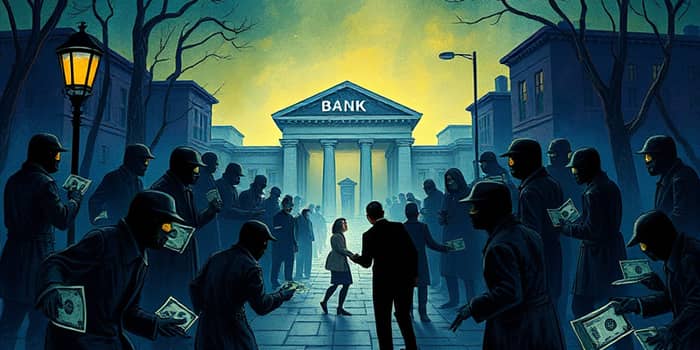
The shadow economy thrives in the hidden corners of our financial world, silently shaping the fate of borrowers and lenders alike. As unreported income grows, so too does the divide between those who can prove their earnings and those who cannot. This article explores how invisible earnings can both exclude and distort access to credit, and offers practical steps to bridge the gap between hidden cash flows and formal lending.
The shadow economy encompasses more than just illicit markets. It includes unreported income from legal production, informal employment paid in cash, and unregistered transactions that escape official records. Across countries and sectors, this hidden activity undermines transparency and erodes public revenues.
Estimates suggest that the global shadow economy accounts for up to 20% of GDP in advanced nations and exceeds 40% in emerging markets. These figures highlight how pervasive underreporting has become, creating a parallel financial system where borrowers operate outside the reach of formal institutions.
For lenders, reliable documentation is paramount. Tax returns, audited statements, and bank records serve as proof of repayment capacity. When income is unreported or documented only in cash, borrowers face steep hurdles at every step of the loan process.
Key implications for credit markets include:
Far from being mere technicalities, these issues have real consequences. A small business owner paid partly in cash may be denied a growth loan, while a wealthier individual concealing offshore assets can secure financing beyond their declared means. Both situations distort lending outcomes, undermining fairness and stability.
Shadow income affects a wide spectrum of earners. On one end, informal workers and gig-economy participants struggle to document earnings. On the other, high-net-worth individuals may underreport dividends or offshore gains, creating hidden leverage that escapes domestic regulators.
The most vulnerable groups include:
The irony is stark: those who need formal credit most often lack the documentation to secure it, while those with hidden wealth can access financing at favorable terms. This dual distortion deepens inequality and weakens public trust in financial systems.
Quantitative research reveals startling figures. An NBER study finds that unreported income as a fraction of true earnings rises from 7% in the bottom 50% of earners to over 20% in the top 1%. Offshore assets are similarly significant, with global undeclared financial assets estimated between $6.1 and $7.2 trillion.
These numbers matter because lenders base decisions on declared income and assets. When borrowers hide wealth or earnings, risk assessments become skewed, interest rates misaligned, and systemic fragility increases.
Three core mechanisms link hidden incomes to credit misallocation:
Each mechanism erodes the foundation of sound underwriting, pushing credit markets toward inefficiency and volatility.
Addressing the shadow economy’s credit impacts requires coordinated action from policymakers, financial institutions, and borrowers. Concrete steps include:
By integrating informal earnings into formal systems, lenders can harness hidden cash flows to drive growth, while borrowers gain access to fair and transparent credit.
The shadow economy may be invisible, but its credit implications are profound. Underreported income both excludes legitimate borrowers and distorts risk assessment, fueling inequality and financial instability. Yet the story is not one of inevitability. Through innovation in verification, inclusive policy design, and greater transparency, we can illuminate hidden incomes and foster a more equitable credit landscape.
As stakeholders—from small entrepreneurs to policymakers—embrace these solutions, the vast realm of unreported earnings can transform from a source of risk into an opportunity. By bridging the gap between shadow and formal finance, we not only strengthen individual livelihoods but also reinforce the resilience of our global economy.
References