Search
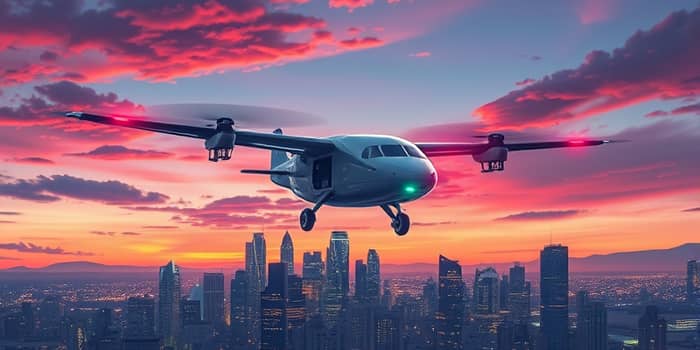
In the face of rapid urban expansion and evolving passenger needs, a new era of transportation is on the horizon. Urban Air Mobility (UAM) promises to revolutionize the way we move within and around cities by leveraging cutting-edge technologies and innovative aircraft designs.
Urban Air Mobility refers to the operation of small, highly automated electric aircraft that transport passengers or cargo at low altitudes over urban and suburban areas. According to NASA, it is envisioned as a safe and efficient system for air passenger and cargo transportation within an urban area, integrating onboard and ground-piloted operations toward greater autonomy.
Regulatory bodies like EASA define UAM as a new safe, secure, and more sustainable air transportation system for cities, enabled by advanced technologies and woven into existing multimodal networks. Although UAM is often viewed as a subset of Advanced Air Mobility (AAM), which spans urban to regional environments, UAM's core focus remains the dense, peri-urban corridors where demand is highest.
The backbone of UAM is the diverse range of aircraft architectures being developed. These platforms share common technical features that drive safety, efficiency, and environmental performance.
Key technological components include:
Global market forecasts depict explosive growth in UAM, reflecting strong investor confidence and rapid technological progress. From modest beginnings, the industry is set to scale at an impressive pace.
With a compound annual growth rate of over 25%, UAM is anticipated to generate nearly 160,000 unmanned electric drones for passenger and cargo missions by mid-century.
UAM's versatile platforms open new possibilities across multiple sectors, transforming daily life and business operations alike.
Public surveys underscore the value of medical and emergency applications, with 41% of respondents citing transport of injured persons and medical supplies as top priorities.
Urban Air Mobility promises to deliver reduced congestion and travel time by bypassing clogged roadways with direct, aerial routes. EASA data shows 71% of citizens anticipate faster emergency response, while 51% expect fewer traffic jams.
Electric propulsion offers zero direct tailpipe emissions, a critical factor in mitigating urban air pollution. By replacing conventional ground vehicles, eVTOLs have the potential to improve local air quality and reduce greenhouse gas emissions.
Moreover, UAM fosters improved accessibility and connectivity by linking remote neighborhoods, underserved regions, and vital services. This new transport layer can catalyze economic development, creating jobs in manufacturing, operations, and infrastructure development.
Despite its promise, UAM faces significant hurdles before widespread adoption. Key challenges include technological limitations, regulatory complexities, and social acceptance.
Energy storage remains a bottleneck: current battery chemistry limits range and payload, necessitating ongoing research into alternatives like hydrogen and advanced hybrid systems. Integrating UAM into existing airspace requires robust traffic management frameworks and regulatory harmonization across jurisdictions.
Safety and noise concerns also weigh heavily on public perception. Developers must demonstrate reliable fail-safe systems, noise reduction strategies, and stringent certification processes to earn community trust.
The path to realizing Urban Air Mobility is both exhilarating and demanding. Industry leaders predict early commercial operations by the mid-2020s, with initial routes connecting major city centers to airports and business districts.
To succeed, stakeholders must collaborate across aviation, urban planning, and technology sectors. Policymakers, manufacturers, and service providers need to align on standards for safety, infrastructure, and environmental performance.
As the industry matures, the convergence of electric propulsion, autonomy, and digital networks will unlock new possibilities. Urban Air Mobility holds the promise of cleaner cities, faster travel, and unprecedented connectivity—ushering in a transformative chapter in the story of human transportation.
References