Search
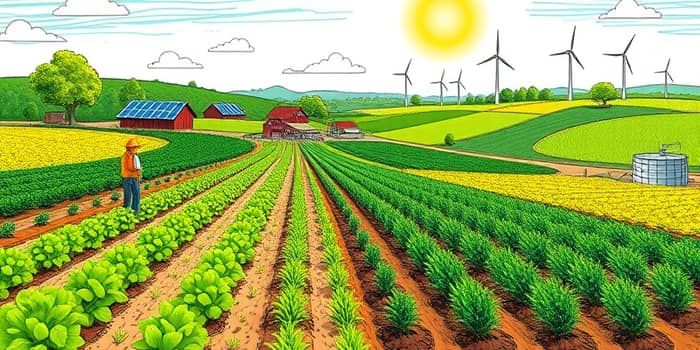
As the world’s population climbs toward an estimated 9.7 billion by 2050, our food systems face an unprecedented challenge. Experts project that we must raise production by over 70% to meet global nutritional needs without depleting natural resources. Sustainable agriculture offers a holistic path forward, balancing productivity with ecological and social well-being.
Today nearly one billion people remain undernourished, and conventional intensification has eroded soils, depleted water tables, and reduced biodiversity. Transitioning to more regenerative methods is essential if we hope to nourish all people now and secure the future of our planet.
Global food production rose 61% from 1990 to 2019, outpacing population growth of 45%. Yet this gain came with significant environmental costs: soil erosion, nutrient runoff, greenhouse gas emissions, and collapsing pollinator populations. Without change, pushing yields higher through conventional methods risks undermining the very ecosystems we depend on.
Sustainable agriculture seeks to meet present food and production needs without compromising the prospects of future generations. It reframes farming as a long-term partnership with nature—nurturing soils, conserving water, and supporting vibrant communities—to build systems that remain productive, fair, and resilient in the face of climate shocks.
Several intertwined forces are driving the surge in global food demand:
Even with constant diets, population alone would drive a 70–100% increase in production by 2050. Historically, intensification achieved faster growth than demand, but it taxed soils, water, and biodiversity, highlighting the need for more sustainable approaches.
Sustainable agriculture is built on three core pillars: ecological integrity, economic viability, and social equity. It aims to deliver abundant, nutritious food while preserving the Earth’s life-support systems.
First, it emphasizes protect the environment and Earth’s natural resources through practices that enhance soil health, safeguard water quality, and foster biodiversity. By working with ecological cycles, farmers can reduce chemical inputs and build resilient landscapes.
Second, it ensures ensure farms can be profitable and maintain livelihoods by promoting fair markets, reducing input costs, and supporting local enterprises. Financial incentives and community engagement help embed sustainable methods in rural economies.
Third, it champions social well-being by fostering equitable access to land and resources, safeguarding labor rights, and strengthening local food networks. These connections empower consumers and producers alike, improving food security and nutrition outcomes.
Adopting sustainable agriculture means integrating complementary methods that restore ecosystems even as they feed people. Some of the most effective practices include:
When combined, these methods can raise yields by 20–50% over time, while cutting input costs, sequestering carbon, and building resilience against climate extremes. Extension services, farmer cooperatives, and digital advisories are crucial to scaling these innovations.
Shifts toward sustainable practices are driven not only by farmers but by supportive policies and incentive structures. The table below highlights some key programs:
These frameworks reduce financial risks for farmers adopting conservation practices and create market signals that value ecosystem services. International collaborations, such as the Global Alliance for Climate-Smart Agriculture, leverage research and funding to accelerate transitions worldwide.
Private sector initiatives, including sustainable sourcing commitments by food companies, further drive adoption by offering premium markets for sustainably produced commodities. Certification schemes and digital traceability systems build consumer trust and reward best practices.
Sustainable agriculture directly tackles soil degradation by rebuilding organic matter and structure. Healthy soils retain water more effectively, reducing irrigation needs and increasing tolerance to drought and flooding. This more resilient to climate variability foundation shields both farmers and ecosystems from extreme events.
Water scarcity is addressed through innovative water-saving techniques such as precision irrigation and rainwater harvesting. By aligning planting schedules with rainfall patterns and optimizing on-farm storage, communities can buffer against erratic weather and preserve critical aquifers.
Socially, regenerative methods can improve rural livelihoods by lowering input expenses, creating green jobs, and enhancing local food security. By fostering cooperative models and equitable land access, marginalized farmers gain the resources and agency needed to thrive.
Challenges remain: balancing productivity with conservation, managing transitional yield dips, and navigating debates over technologies like genetically modified crops or synthetic biology. Engaging stakeholders, investing in rural education, and transparent policymaking are key to overcoming these hurdles.
Feeding a growing population amidst climate uncertainty demands systems that are both productive and regenerative. Sustainable agriculture offers a roadmap that harmonizes yield goals with ecosystem stewardship and social inclusion. It is a dynamic, place-based approach—each farm can adapt techniques to local soils, water, climate, and cultural contexts.
Farmers, researchers, policymakers, businesses, and consumers all share responsibility. By supporting policies that reward ecosystem services, investing in research and infrastructure, and choosing sustainably grown food, we can transform our food systems. Together, we can build a future where agriculture nourishes people, empowers communities, and preserves the planet for generations to come.
References