Search
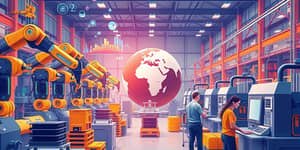
In the dawn of a new era, biological systems are poised to transform industry. By harnessing the latent power in cells, microbes, and plants, biomanufacturing offers unprecedented opportunities. From sustainable fuels to life-saving therapeutics, this emerging discipline is laying the groundwork for a bio-based industrial revolution that could reshape global markets and human lives. As economies awaken to the promise of living factories, the pace of innovation accelerates, driving both excitement and the need for strategic action. This article explores the core concepts, economic impact, sectoral applications, enabling technologies, workforce challenges, and policy considerations shaping what we call the next industrial revolution.
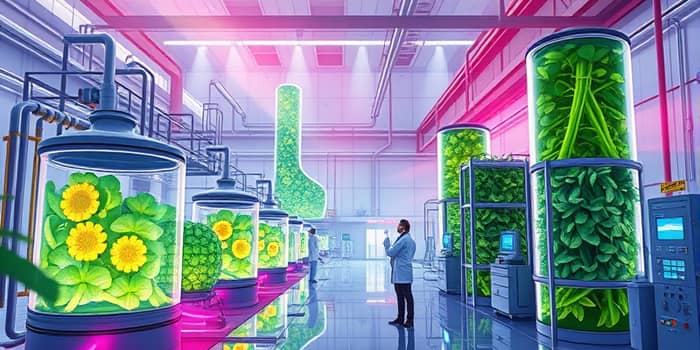
At its core, biomanufacturing is using biology and biological systems to perform production operations. Living cells act as molecular factories, churning out complex molecules that once required harsh chemicals or scarce natural resources. This approach covers a vast range of outputs, including pharmaceuticals, biofuels, materials, and foods. As Berkeley Lab describes, biomanufacturing taps into the molecular machinery in microbes to create both traditional products and entirely novel compounds with unique properties.
ElevateBio highlights the specialized subset of cell and gene therapy manufacturing, where scaling from millions of cells in the lab to billions for patients demands intricate processes and quality control. Meanwhile, the World Economic Forum frames the field as a pillar of the coming era, defining “cyan-collar” roles that bridge green technologies, automation, and traditional manufacturing skills. Embracing this paradigm shift requires rethinking resource inputs, waste streams, and supply chains across industries.
Biomanufacturing is already a major economic engine. In the United States alone, annual contributions exceed $210 billion, with projections suggesting a rise to $400 billion by 2030. Globally, the bioeconomy accounted for nearly $5 trillion in 2019—almost 6% of world GDP—and is on track to surpass $20 trillion within the next decade. These figures underscore the potential of living systems to drive sustainable growth at scales rivaling the steam engine or electrification revolutions of the past.
Within pharmaceuticals, biotech drug sales soared to approximately $458 billion in 2024, tripling over a decade. Industrial bioeconomy segments—encompassing bioplastics, biofuels, and biobased chemicals—are equally robust, fueled by an urgent need to replace petrochemicals and reduce carbon footprints. Even with temporary headwinds such as cyclic pressures in research funding, the long-term trajectory points firmly upward, cementing biomanufacturing’s role as a key pillar of future prosperity.
Biomanufacturing’s versatility spans medicine, industry, agriculture, and consumer goods. By replacing finite resources with renewable inputs, it tackles pressing challenges in health and environment while opening new market frontiers. Key applications include:
Beyond these, advanced research explores bioprinted tissues and genetically tailored organisms for organ transplantation, hinting at a future where the boundary between biology and engineering blurs completely.
The toolkit driving this revolution is rich and interdisciplinary. From genetic scissors to digital design, innovations accelerate each step of the chain:
These technologies converge to form a seamless workflow, where iterative design-build-test cycles compress development timelines from years to months. The result is an agile, responsive production system attuned to evolving market and environmental demands.
Despite its promise, biomanufacturing faces hurdles in scaling, regulation, and talent development. Complex biologic processes demand rigorous quality management and regulatory oversight, especially in cell and gene therapy production. Transitioning from petri dish discoveries to industrial volumes involves overcoming technical barriers such as upstream bioreactor consistency and downstream purification efficiency.
The sector also contends with a skills gap. “Cyan-collar” roles require a blend of microbiology expertise, engineering acumen, and digital proficiency. Education and training programs must evolve to produce technicians, scientists, and engineers fluent in this interdisciplinary language. Public-private partnerships, apprenticeship models, and targeted scholarships can help build the workforce required to sustain rapid expansion.
Governments worldwide are recognizing biomanufacturing’s strategic importance. Initiatives in the European Union, China, and the United States aim to bolster domestic capacity, safeguard supply chains, and foster innovation ecosystems. Policy frameworks that balance biosecurity with open research, streamline regulatory pathways, and incentivize sustainable feedstocks will be pivotal.
At the geopolitical level, leadership in biomanufacturing confers both economic and security advantages. Nations investing in advanced biorefineries, modular production platforms, and robust talent pipelines position themselves at the vanguard of the next wave of industrialization. As the world confronts climate change, pandemics, and resource scarcity, biomanufacturing offers a resilient, scalable solution.
Looking ahead, the convergence of biology, engineering, and digital technologies heralds a transformative era. By embracing green manufacturing technologies and aligning policy with innovation, society can unlock the full potential of living systems. The next industrial revolution is not just about machines and assembly lines—it is about molecular machines, genetic code, and the boundless creativity of life itself.
References