Search
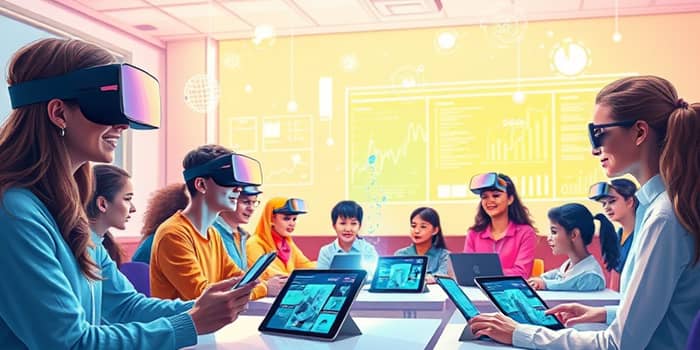
In an era defined by rapid technological advancement, education has emerged as a central focus for innovation. The global EdTech sector is projected to exceed US$598.82 billion by 2032, reflecting a remarkable demand for interactive, accessible, and personalized learning solutions. The COVID-19 pandemic acted as a catalyst for digital transformation, prompting schools and universities to adopt online and hybrid models almost overnight. As institutions and learners adapt to evolving needs, digital platforms and tools are reshaping classrooms, campus experiences, and lifelong learning pathways. This article explores the driving forces behind this transformation, highlights key trends, and offers practical guidance for educators and stakeholders committed to harnessing technology effectively.
The unprecedented acceleration of online and blended learning has created fertile ground for innovation across generations of learners. With an expected annual growth rate of over 17%, this industry is no longer niche. Investments in infrastructure and content are complemented by pioneering research into pedagogical effectiveness, driving a virtuous cycle of adoption and improvement.
Spending on VR and AR technologies is set to reach US$12.6 billion by 2025, offering immersive encounters from virtual historical reconstructions to simulated science experiments. Meanwhile, daily AI usage in classrooms by 60% of educators has shifted conversations from “what to adopt” to “what’s worth keeping” in a post-pandemic world. More than 40% of US manufacturers are projected to integrate digital twin technology by 2025, influencing technical education curricula and on-the-job training modules. Together, these dynamics underscore a global EdTech market growth trajectory that promises to redefine educational practice and align with UNESCO’s goal of inclusive and equitable quality education.
Education technology continues to evolve at breakneck speed, with several converging trends shaping the present and future of learning. The table below distills core movements and their anticipated impacts.
Beyond the table, other emerging trends include AI-generated content, which can produce entire lesson plans and assessments from minimal input, and wearables that capture biometric data to support students with disabilities. Career and Technical Education (CTE) programs are increasingly partnering with industry leaders to provide real-world equipment access and digital credentials in specialized fields.
By integrating technology thoughtfully, schools and organizations can create more engaging, equitable, and efficient learning environments. AI-driven tools automate routine grading, schedule optimization, and administrative tasks, freeing educators to focus on high-value interactions with students. This shift not only enhances instructional quality but also reduces teacher burnout and preserves instructional time. In parallel, immersive simulations and gamified modules foster deep conceptual understanding, boost student motivation, and support mental well-being through interactive feedback mechanisms.
Despite its promise, EdTech adoption is not without obstacles. Equity concerns loom large when access to devices and reliable connectivity is uneven, raising questions about fairness and inclusion. Privacy and data security challenges demand vigilant governance, as sensitive student information becomes more pervasive in cloud-based systems. Educators may worry about over-reliance on automated systems leading to diminished human interaction and creativity loss. Policymakers and institutions must develop comprehensive frameworks to ensure responsible implementation that addresses these ethical, technical, and social dimensions.
Across K–12, higher education, and corporate training environments, innovative projects illustrate how EdTech can transform outcomes. Squirrel AI’s adaptive tutoring has demonstrated significant gains in test scores by pinpointing individual learning gaps. In medical education, VR surgical simulations allow students to practice complex procedures in risk-free settings, enhancing preparedness and confidence.
Manufacturers like aerospace firms are deploying digital twins to train employees on advanced machinery, a practice that has spilled over into technical education programs. Emotional detection algorithms are being piloted to monitor student stress levels during assessments, prompting timely interventions and counseling support.
In the financial sector, banks have launched VR-enabled compliance training that immerses employees in simulated regulatory environments, improving retention and reducing real-world risk. Retail chains use microlearning apps to train new hires on product knowledge via bite-sized modules accessible on employees’ smartphones. These diverse applications demonstrate that EdTech’s reach extends far beyond traditional classrooms to every facet of professional development.
As we move into 2026 and beyond, the imperative is clear: technology must serve human learning, not the other way around. Institutions should invest in streamlined administrative tasks and feedback systems while prioritizing ethical AI literacy and governance education for faculty and students. By adopting holistic human-centered design principles, stakeholders can ensure that tools enhance, rather than replace, the relational core of education.
Leadership teams should balance innovation with budget constraints, engaging faculty in decision-making and providing ongoing professional development. Collaborations with policymakers and international organizations like UNESCO can catalyze standard-setting and equity safeguards, ensuring that benefits reach learners across geographic and socioeconomic boundaries. Reflecting on the past half-decade, it is evident that thoughtful integration of technology increases both access and quality.
Educators, technologists, and learners must collaborate to co-create solutions that uphold integrity, inclusivity, and adaptability in an ever-changing world. By uniting diverse perspectives, we can design educational ecosystems that respond to new challenges and opportunities as they emerge.
Ultimately, EdTech’s promise lies in its ability to empower every learner to reach their full potential. When implemented with care, creativity, and collaboration, these tools will not just power the future of learning—they will transform it. Let us embrace this opportunity with optimism, responsibility, and a shared commitment to lifelong education for all.
References