Search
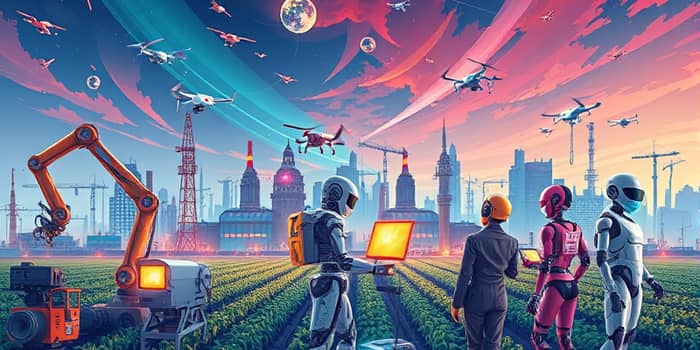
In an era defined by rapid technological advancement, robotics and automation have emerged as catalysts for profound change across the global economy. From factory floors to open fields, these systems are reshaping the way we work, produce, and innovate.
Robotics and automation represent more than mere tools; they embody a fundamental shift in industrial paradigms that unlocks new levels of efficiency and productivity. According to recent projections, the global robotics market is expected to reach $67.4 billion by 2025, reflecting the unwavering commitment of businesses to embrace these technologies.
When fused with artificial intelligence and machine learning, robots gain the capacity for adaptability and decision-making. This fusion of AI with robotics enables predictive maintenance, quality control, and real-time responsiveness, driving down downtime and elevating output.
These figures translate into measurable cost reduction of 5-7% for operations that integrate robotics under an Industry 4.0 framework. Cycle times shrink, defect rates drop, and overall throughput climbs as humans and machines collaborate seamlessly.
Across sectors, robotics and automation are delivering tailored solutions to long-standing challenges. Below are key examples of how industries are evolving:
This wave of disruption is underpinned by a collaborative robotics market projected to exceed $1 billion in revenue, with over 40,000 cobots in operation, working safely alongside human counterparts.
While robotics deliver undeniable gains, they also pose significant challenges for the workforce and communities. Studies indicate that for every additional robot per 1,000 workers, wages decline by 0.42% and employment-to-population ratios drop by 0.2 percentage points.
Between 1990 and 2007, regions with high robot adoption experienced up to a 0.77% decline in average wages, concentrated in manufacturing, automotive, electronics, and construction. Projections suggest that by 2025, the U.S. could see an additional 1 million jobs displaced under aggressive automation scenarios.
Moreover, automation risk varies by demographic group:
Despite these difficulties, new opportunities emerge in roles such as robot maintenance, advanced welding, and data analysis. Surveys reveal that 70% of employees are willing to upskill, embracing continuous learning to align with evolving job requirements.
Looking forward, the convergence of five critical technologies will define the next wave of automation:
By 2027, annual robot installations are projected to exceed 600,000 units, and the global market may surpass $200 billion. These advancements will foster smart factories with autonomous decision pathways, accelerating time-to-market for new products.
Ultimately, the integration of robotics and automation demands a balanced approach: leveraging game-changing efficiency and precision while investing in workforce transition programs and educational initiatives. Policymakers, educators, and industry leaders must collaborate to ensure equitable access to new roles and upskilling opportunities.
As we stand at this crossroads, robotics and automation are not merely industrial tools but agents of social and economic transformation. Embracing their potential with responsibility and foresight will shape a future where human ingenuity and machine capability converge for unprecedented progress.
References